
 EN
EN
Why Compact Rubber Mixer Design Is Reshaping Small-Scale and High-Mix Production
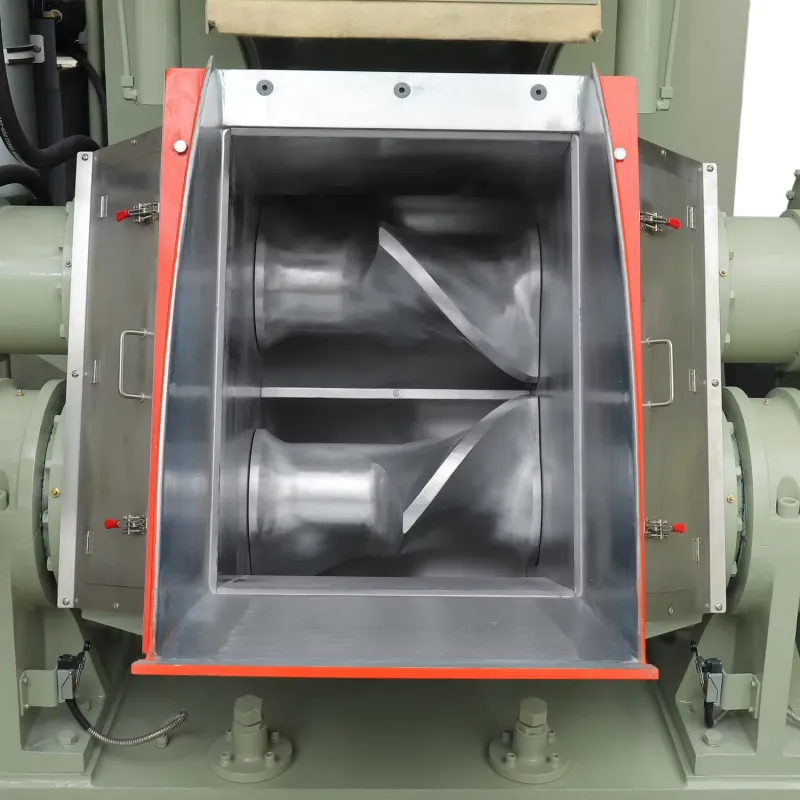
Smaller rubber mixing machines are changing how specialized manufacturers operate, mainly because they solve two big problems at once: not enough room on factory floors and constantly shifting production needs. These compact units take up about 40 to 60 percent less space compared to standard models according to last year's industry study on polymer processing efficiency. That means factories can rearrange their layout more easily without sacrificing quality output. The design works particularly well for companies that need to switch between different materials frequently. Take those making medical devices or parts for cars who deal with over fifty distinct formulas each month. With these smaller systems, switching batches takes around thirty percent less time thanks to easier cleaning procedures and parts that snap together quickly. Modern versions still pack serious power though, delivering torque above 12,000 Newton meters and keeping temperatures stable within just one degree Celsius difference. This kind of control makes sure the rubber cures properly even when working with tiny batches. And all this flexibility comes with another bonus: plants using these machines consume about twenty-two percent less energy per kilogram of material mixed, which helps make green manufacturing practices actually affordable for small scale operations.
Core Performance Metrics of a Compact Rubber Mixer: Torque, Thermal Control, and Fill Efficiency
Getting the right amount of torque is important because it helps create proper material shear during dispersion without putting too much strain on the motors. Studies published in engineering journals have shown that when torque curves are properly optimized, power usage drops around 15-20% in those smaller batch runs. Controlling temperature precisely stops materials from curing too early and actually makes mixing cycles go faster. The way heat gets dispersed throughout the system also cuts down on how much energy each batch consumes, maybe around 20% less depending on conditions. Fill efficiency basically means how full the mixing chamber is compared to what it can hold. Most experienced manufacturers suggest keeping things between 60% and 75% full when working with limited space. This sweet spot allows good dispersion without sacrificing production speed or shear quality.
Optimizing Rotor Speed and Fill Factor for Consistent Dispersion in Limited Footprint Mixers
Getting the right balance between rotor speed and compound viscosity stops those annoying agglomerates from forming. When working with thick materials, slowing down to around 40-60 RPM works best for most applications. This gives everything time to mix properly without overheating the batch. At the same time, keeping the tank filled to about 65-70% helps distribute ingredients evenly throughout the mixture. Going over 75% fill just makes things worse because the mixer can't create enough shear force, leading to patchy results across different parts of the batch. Some tests have shown that when compact mixers have really tight rotor gaps under 1.5mm, they actually produce better dispersion quality. The closer space seems to intensify how the material gets worked through during mixing, which explains why many manufacturers prefer these configurations despite the tighter tolerances required.
Thermal Management Advantages: How Compact Rubber Mixers Reduce Cycle Time and Energy Use
Cooling jackets built into mixing equipment keep temperatures within a tight ±2°C range throughout the process, which stops heat-sensitive materials like thermoplastic elastomers (TPEs) from getting scorched. When manufacturers automate temperature control during mixing, they actually cut down on how long each batch takes to make, saving roughly 15% of time compared to older methods. Some newer mixer models even capture excess heat generated during operation and put it to work heating up plant facilities instead of letting it go to waste. What we're seeing now is something different from what used to be the case. Compact mixers aren't settling for lesser temperature control just because they're smaller anymore. Instead, these machines are designed right from the start to provide precise thermal management alongside their reduced footprint.
Smart Automation Integration in Compact Rubber Mixer Systems
The rubber processing industry has started turning to smart automation solutions to deal with space limitations while still maintaining good product quality. These days, many companies are using compact rubber mixers with advanced control systems that let them get accurate mixing results even when factory floor space is tight, plus they need fewer workers standing around monitoring things manually. When it comes to managing the whole production process automatically, this approach helps keep the quality of rubber compounds consistent across batches and cuts down on mistakes during operation. This matters a lot for facilities handling multiple different products at once since there's always going to be some variation between runs anyway.
Real-Time Batch Monitoring and Predictive Energy Optimization
Real time batch monitoring keeps an eye on key factors like temperature, how thick the mixture gets, and how well everything mixes together using those built in IoT sensors. With all this constant data coming in, operators can tweak things fast, sometimes changing rotor speeds in under half a second to keep the mixture just right. At the same time, these systems run predictive energy calculations that look at past power usage along with what's happening now. They basically guess when heat will be needed next and adjust cooling or heating accordingly. This approach cuts down on energy use somewhere around 12 to maybe even 18 percent and makes each batch go faster too. When monitoring works hand in hand with these optimizations, it brings down costs per batch roughly 15 bucks on average and stops wasted materials before problems get out of hand. Take viscosity corrections during mixing stages as one example where automatic adjustments stop batches from going bad, showing how smart tech turns regular mixers into real workhorses in tight spaces where floor room matters most.
Selecting the Right Compact Rubber Mixer: Matching Scale, Compound Complexity, and Output Goals
Picking the right compact rubber mixer involves getting three main things to work together: how much stuff needs to be mixed, what kind of compounds are being used, and how fast the operation needs to run. If the machine is too small for what's needed, it just gets stressed out trying to handle big volumes. Bigger machines than necessary end up costing extra money on electricity and materials that go to waste. When dealing with complex mixes such as silicone or fluorocarbon rubbers, maintaining exact temperatures becomes really important, along with having the right shape for the mixing rotor. Facilities that need lots of output want quick cycles but still maintain good dispersion quality. That means investing in better heat control systems and automation that responds quickly to changes during the mixing process.
Case Insight: CF-Mini Series in TPE Production – Balancing Flexibility, Precision, and Floor Space
The CF-Mini series exemplifies how compact designs achieve industrial-grade results in thermoplastic elastomer (TPE) manufacturing. Its synchronized dual rotors maintain viscosity stability across variable recipes, enabling swift transitions between soft and rigid compounds.
- Precision: ±1°C temperature uniformity ensures homogeneous filler distribution
- Footprint: 40% smaller than traditional mixers, freeing production space
- Efficiency: 22% faster cycle times versus standard models while reducing energy use by 18%
Operators report 30% higher batch consistency in complex TPE formulations due to optimized shear rates. The system’s modular automation interfaces support real-time adjustments for pigment loading and cross-linking agents—proving that properly scaled compact rubber mixers overcome spatial constraints without sacrificing precision or flexibility in high-mix environments.
FAQ Section
What are the key advantages of compact rubber mixers?
Compact rubber mixers save space and energy, reduce batch switching time, and provide precise torque and temperature control, making them suitable for flexible production needs.
How do compact rubber mixers help with energy efficiency?
They consume about 22% less energy per kilogram of material mixed due to optimized torque and thermal management, making green practices affordable for small-scale operations.
Why is rotor speed and fill factor optimization important in compact mixers?
Optimization prevents agglomerates formation, ensures even dispersion, and maintains shear quality without overheating, resulting in better product consistency.
How does smart automation improve rubber mixing processes?
Smart automation enables accurate mixing results, reduces manual oversight, ensures consistency across batches, and cuts operational errors.
What to consider when selecting a compact rubber mixer?
Consider the scale, compound complexity, and output goals to avoid overworking or underutilizing the equipment for efficient mixing operations.
Table of Contents
- Why Compact Rubber Mixer Design Is Reshaping Small-Scale and High-Mix Production
- Core Performance Metrics of a Compact Rubber Mixer: Torque, Thermal Control, and Fill Efficiency
- Smart Automation Integration in Compact Rubber Mixer Systems
- Selecting the Right Compact Rubber Mixer: Matching Scale, Compound Complexity, and Output Goals
-
FAQ Section
- What are the key advantages of compact rubber mixers?
- How do compact rubber mixers help with energy efficiency?
- Why is rotor speed and fill factor optimization important in compact mixers?
- How does smart automation improve rubber mixing processes?
- What to consider when selecting a compact rubber mixer?