
 EN
EN
Why Precise Temperature Control Is Critical in Rubber Mixer Performance
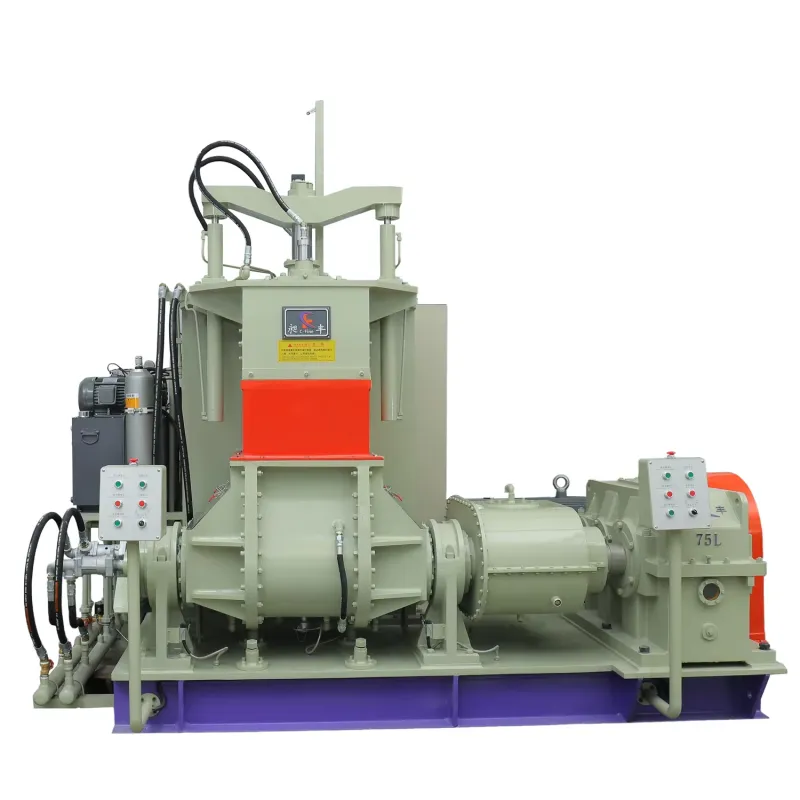
How Temperature Variability Affects Crosslinking, Dispersion, and Final Compound Consistency
When temperatures vary during the rubber mixing process, it messes up what happens at the molecular level. Rubber works best when mixed between about 40 and 100 degrees Celsius. If things get too hot, above this range, the vulcanization process speeds up too much, causing the rubber to become brittle and break during durability tests. On the flip side, if it's too cold, the fillers don't spread evenly through the polymer mixture. What we end up seeing are differences from one batch to another in how strong the rubber is, how far it can stretch, and whether the compound stays consistent throughout. Some research papers on rubber processing show that once temperatures go past 130°C, there's around a 60% chance of getting scorch issues, which marks the point where the material starts breaking down permanently. So controlling temperature isn't just nice to have for better results—it's actually essential if manufacturers want their products to meet specifications consistently across all batches.
Consequences of Thermal Inconsistency: Scorch Risk, Energy Waste, and Equipment Strain
When thermal stability goes off track, it actually leads to three main types of failures that are all connected somehow. The first problem happens when there are these hot spots that form in specific areas where the temperature goes beyond what the materials can handle before scorching occurs. These hot spots have been known to wipe out whole product batches, which costs around $15k each time just for materials and labor alone. Then we get into these constant back and forth adjustments between cooling and heating systems trying to fix temperature drift issues. This kind of reactive approach eats up about 30% more energy than normal operations would need, making it really tough on both environmental targets and day to day running costs. And finally, all this temperature fluctuation creates real mechanical stress on equipment components. Take rotor bearings for instance they tend to wear out much faster when exposed to temperature swings of plus or minus 20 degrees Celsius compared to bearings operating under stable conditions. Put all these factors together and what happens is that mixers don't last nearly as long as they should probably about 40% shorter lifespan overall. Maintenance teams end up spending significantly more money fixing things across different production lines, which naturally affects how much companies spend in total on owning and maintaining their equipment.
Advanced Temperature Control Technologies in Modern Rubber Mixer Systems
PID Controllers, Embedded Thermal Sensors, and Closed-Loop Feedback for Real-Time Adjustment
Today's rubber mixing equipment comes equipped with high resolution thermal sensors placed throughout the rotor assembly, along chamber walls, and at feed points. These sensors constantly send information to PID controllers that manage the process. The control systems can make adjustments within milliseconds to either increase or decrease cooling flow rates or activate auxiliary heating elements. This keeps temperatures stable within about 1.5 degrees Celsius range, which is really important during those intense high shear mixing operations. What makes these systems stand out is how they connect what's happening with viscosity in real time to specific temperature limits. Take natural rubber for instance. When it gets close to that dangerous 160 degree scorch point, the system actually starts adjusting coolant delivery before things get too hot, usually after noticing just a 5 degree rise. Field tests have shown that these advanced systems cut down on wasted energy by around 23 percent compared to older methods. Plus, machines last significantly longer too, about 30 thousand extra operating cycles before needing major maintenance over traditional manual or basic automated controls.
IoT-Enabled Monitoring: Tracking Rotor Speed, Energy Input, and Batch-Specific Thermal Profiles
When IoT gets integrated into temperature management systems, it changes everything from just fixing problems after they happen to actually predicting issues before they occur. The onboard sensors track all sorts of things during production runs including rotor speeds, torque levels, power consumption, and how well the cooling system is working for each specific batch. These readings create sort of a thermal signature for every different compound being made. What happens next? Operators can look at live dashboards that show how much energy is going in (measured in kW/h) compared to what's happening with the materials expanding and changing viscosity right now. This lets them jump in early when something looks off. Take synthetic rubber processing as an example. When the recipe calls for slower filler dispersion at around 110 degrees Celsius, the system knows to slow down the rotor speed without letting the temperature drift too far from target, usually keeping it within about plus or minus 1.5 degrees. According to recent industry reports from last year, companies using this kind of smart monitoring have seen their scrap rates drop by nearly 20% and their overall cycle times shortened by roughly 12%. That makes a real difference in bottom line results.
Designing for Durability: Key Features of a High-Performance Rubber Mixer
Building durable equipment starts with premium steel alloys capable of handling pressures over 1500 psi and heat well past 300 degrees Fahrenheit. The rotors and internal chambers are precision machined to cut down on wear and tear during operation, which means parts last around 40% longer than what we see in regular duty machines. What really stands out for longevity? Reinforced housing around those critical bearings keeps everything aligned even when running nonstop. The gears themselves are hardened specifically against those tough carbon black materials that tend to wear things down fast. And let's not forget the sealing system with two lips that keep oil where it belongs while keeping dirt and debris out. When something does need replacing, the modular setup lets technicians swap out just the rotor without tearing apart the whole unit, saving shop time and cutting unexpected shutdowns by roughly two thirds. All these thoughtful design choices add up to significant savings too. Most operators report saving about $18k each year on repairs alone, plus they get consistently good results in terms of material consistency throughout their production runs.
Cooling System Selection: Optimizing Water-Cooling vs. Oil-Cooling for Rubber Mixer Applications
Choosing the proper cooling setup means finding that sweet spot between how fast it reacts, how stable it stays, and what it'll cost over years of operation. Water based systems kick in quicker when temps spike, which matters a lot when working with those delicate rubber compounds that burn easily. Plus they usually don't break the bank upfront. But watch out for mineral buildup inside the pipes if regular cleaning gets neglected. The heat transfer just keeps getting worse month after month. On the flip side, oil cooling setups handle long production cycles better, especially under heavy loads where temperature consistency is king. They maintain much tighter control over material viscosity too. Problem is these systems need constant checking of the oil quality and timely replacements before oxidation starts causing all sorts of headaches down the line.
Thermal Response Time, Maintenance Requirements, and Long-Term Reliability Comparison
- Thermal Response: Water-cooling achieves 30% faster temperature adjustments, making it ideal for batch flexibility and rapid setpoint changes. Oil-cooling prioritizes steady-state stability under prolonged shear.
- Maintenance: Water systems require quarterly descaling and pH-balanced treatment; oil systems demand bi-annual fluid analysis, filtration, and periodic replacement.
- Longevity: With preventive care, water-cooled rotors typically last 5–7 years; oil-cooled units achieve 8–10 years of service but incur ~20% higher lifetime servicing costs due to fluid management and filtration complexity.
Leading manufacturers align technology with application: water-cooling for high-mix, low-volume operations demanding agility; oil-cooling for continuous, heavy-duty compounding where thermal inertia and long-run consistency are paramount.
FAQ
Why is temperature control essential in rubber mixing?
Temperature control is crucial because it affects crosslinking, dispersion, and the consistency of the final compound. Without stable temperature control, products may become brittle or lack even distribution of fillers, leading to inconsistent results.
How do advanced temperature control technologies improve mixer performance?
Advanced technologies like PID controllers and IoT-enabled monitoring provide real-time adjustments and predictive analysis, significantly reducing energy waste and increasing equipment lifespan.
What are the benefits of IoT-enabled monitoring in rubber mixer systems?
IoT-enabled monitoring allows for predictive problem-solving and real-time tracking of rotor speed, energy input, and thermal profiles for batches, resulting in reduced scrap rates and shorter cycle times.
How does cooling system selection affect rubber mixer applications?
Choosing between water-based and oil-based cooling affects response time, maintenance needs, and long-term reliability. The choice should align with the operational demands, such as batch flexibility or steady-state stability.
Table of Contents
- Why Precise Temperature Control Is Critical in Rubber Mixer Performance
- Advanced Temperature Control Technologies in Modern Rubber Mixer Systems
- Designing for Durability: Key Features of a High-Performance Rubber Mixer
- Cooling System Selection: Optimizing Water-Cooling vs. Oil-Cooling for Rubber Mixer Applications