 EN
EN
Core Design Principles of High-Capacity Rubber Mixers
Rotor Architecture: Intermeshing vs. Tangential Designs for Optimal Shear and Throughput
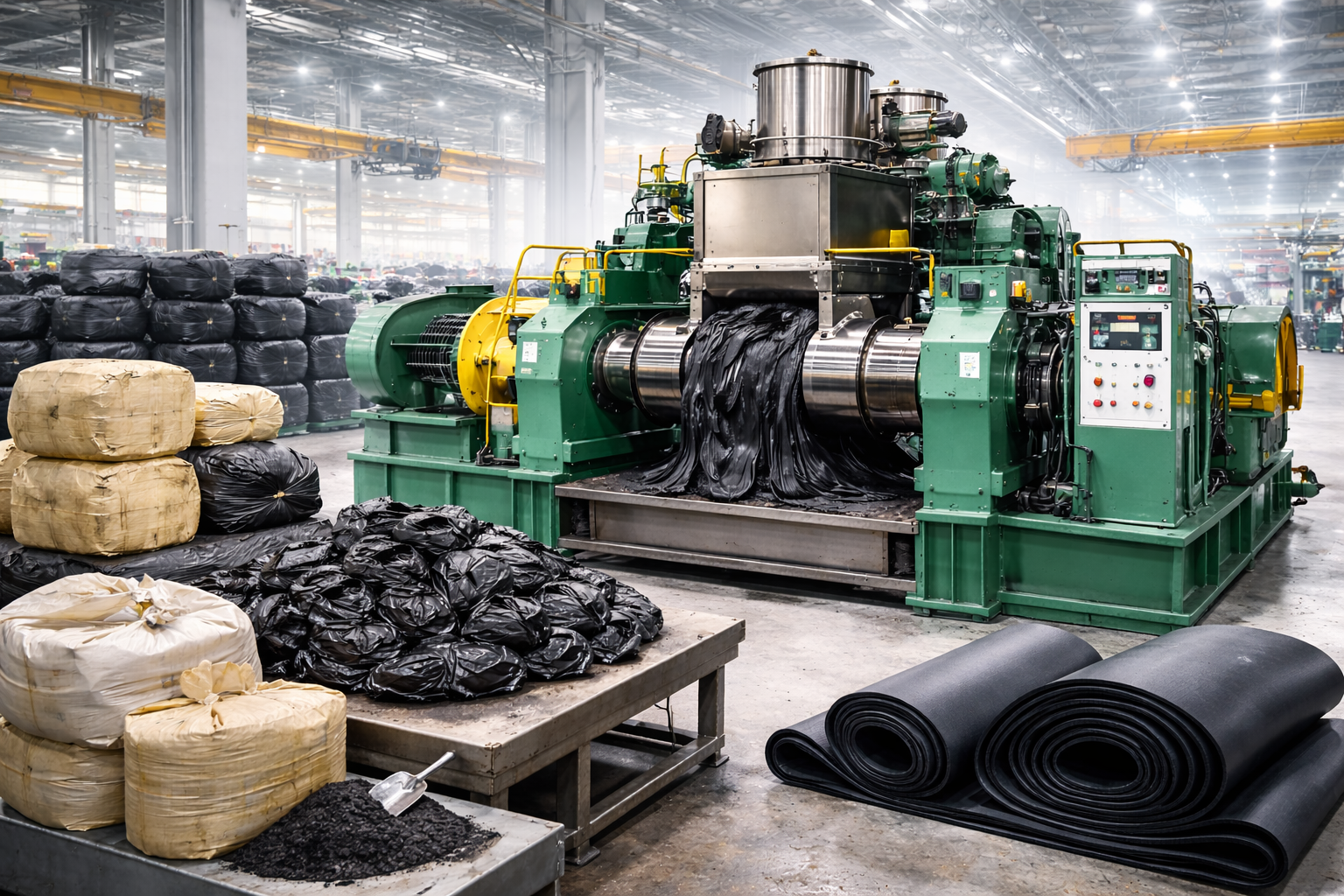
Today's rubber mixing equipment makes use of specific rotor shapes to find that sweet spot between shear force and production speed. Take intermeshing rotors, for instance, these have blades that actually cross over each other as they spin in opposite directions. This creates really intense shear forces which work great when trying to evenly distribute additives throughout tough, thick materials. Sure, the end result is super consistent mixing quality, but there's a catch the maximum rotation speed gets limited, so overall output per hour drops off quite a bit. On the flip side, tangential rotors run separately at much faster speeds, allowing materials to move through quicker and boosting production capacity by around 40%. But here's the thing those rotors don't interact mechanically as much, so operators need to carefully adjust things like ram pressure settings, temperatures, and timing just right to keep dispersion consistent across batches. Both types typically come with hardened steel builds and specially shaped blades designed to handle constant stress levels well beyond 300 MPa. When choosing between options, most manufacturers look at what kind of material they're working with. Intermeshing works best for tricky dispersion jobs while tangential setups tend to be preferred for large volumes where the material isn't so viscous.
Thermal and Mechanical Management: Balancing RPM, Temperature Rise, and Amperage in Large Batches
When running large batches, if friction isn't controlled properly, things can get really hot inside the system - sometimes exceeding 200 degrees Celsius. This kind of heat risks breaking down polymers and activating accelerators too early in the process. The best setups tackle this problem with cooling jackets made of three layers and those fancy VFDs that let operators tweak rotor speeds on the fly. Motor amperage basically tells us what's happening with torque demands, which gives us a good idea about how viscous the compound is getting. Control systems watch both this electrical signal and temperature readings at the same time to adjust ram pressure and keep the chamber filled between around 65% to 75%. Even filling it just 1% over that range can push temperatures up about 1.8 degrees Celsius and make dispersion much less efficient. These days, automated systems actually anticipate problems before they happen. They'll slow down the rotors when temperatures start climbing toward dangerous levels and manage power usage during periods when the machine is working hardest. This whole package keeps batches consistent while saving roughly 30% in energy costs compared to old fashioned manual controls.
Banbury Mixers: The Industry Standard for High-Volume Rubber Mixing
Evolution from Precision Batch to Continuous High-Capacity Rubber Mixer Systems
Banbury mixers started out as simple batch units but now handle massive volumes, processing well over 500 kilograms in each cycle. Tire companies really pushed for this change because they needed machines that could run nonstop day and night. Modern versions cut down on cycle time by around 40 percent while still keeping the material mixed properly throughout. With PLC controls managing the ram pressure and matching rotor speeds automatically, operators can switch formulations quickly without having to manually adjust everything between batches. This move to continuous integrated operation means factories are producing about 30 percent more annually compared to older models, according to what we're seeing in industry reports from late 2023.
Integration into Rubber Mixing Lines: Synchronizing Feed, Mixing, and Downstream Compounding
Modern Banbury mixers have become the heart of automated compounding systems in many manufacturing plants. These machines rely on gravimetric feeders that measure out carbon black, various process oils, and different types of curatives with remarkable precision, around 0.25% accuracy, straight into the mixing chamber. The system also incorporates infrared viscometry sensors which monitor how the material behaves during mixing, enabling operators to tweak parameters while the cycle is still running. When the mixing process finishes, the mixture exits at high temperatures, usually exceeding 160 degrees Celsius, and flows directly to the next stage equipment, like rollers or extruders. Maintaining this heat throughout processing is critical because it affects how well the final product will vulcanize later on. All these connected processes cut down on material waste by approximately 15% compared to older methods and help maintain uniform quality even when production continues through multiple shifts.
Smart Control and Quality Assurance in Modern Rubber Mixer Operations
Closed-Loop Automation and Real-Time Monitoring for Consistent Dispersion Quality
Modern high-capacity rubber mixers are increasingly using closed-loop automation systems to maintain consistent dispersion quality even when producing massive volumes annually. These machines come equipped with built-in sensors monitoring temperature changes, measuring torque levels, and checking viscosity during operation. All this information gets sent directly to smart control systems, which then adjust rotor speeds, apply different pressures, and modify mixing times accordingly. If temperatures start rising too quickly due to friction, the mixer automatically slows down without waiting for someone to notice something's wrong. This approach cuts out the need for constant sampling after mixing is done and minimizes human adjustments, leading to over 15% fewer defective batches at factories following ISO 9001 standards. Better still, these advanced systems create detailed digital records showing exactly what happened during each batch production run. Every quality check gets matched up with specific process settings, making it much easier to find out why problems occur and track materials all the way through for important products like tire treads where consistency matters most.
FAQ
What are intermeshing and tangential rotors?
Intermeshing rotors have blades that cross over each other, creating intense shear forces and achieving consistent mixing quality. Tangential rotors operate at faster speeds separately, boosting production capacity.
How do modern rubber mixers prevent overheating?
Modern rubber mixers use cooling jackets and Variable Frequency Drives (VFDs) to control rotor speeds and manage temperature rise in large batches, preventing polymer breakdown.
Why are Banbury Mixers considered an industry standard?
Banbury Mixers can handle massive volumes efficiently, cutting down cycle time and facilitating continuous integrated operations, which increases annual production.
What role do smart control systems play in rubber mixer operations?
Smart control systems utilize built-in sensors to monitor vital parameters like temperature, torque, and viscosity, adjusting operations in real-time to maintain consistent quality and reduce defective batches.