
 EN
EN
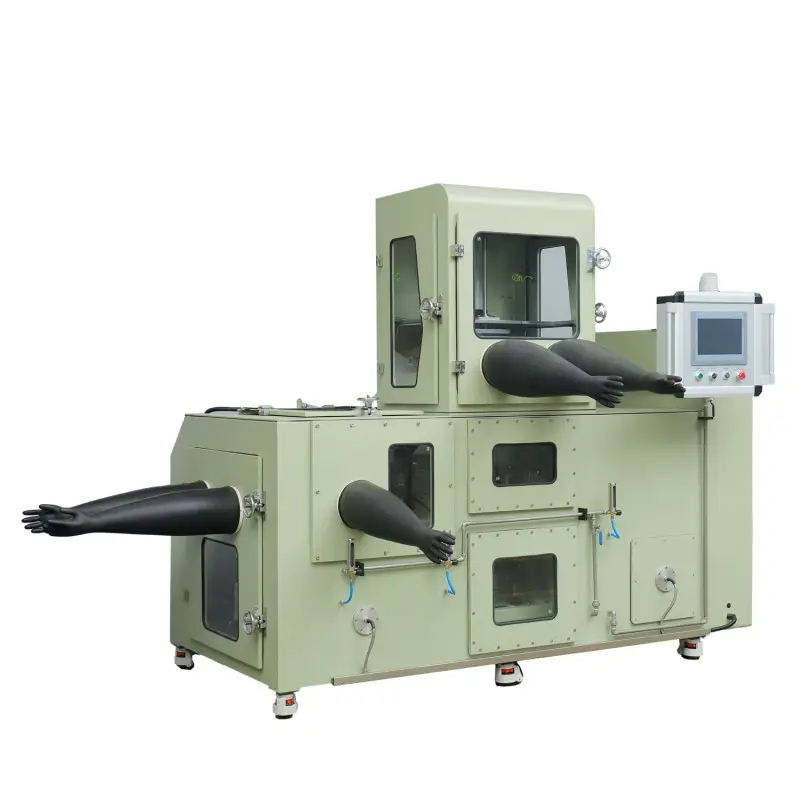
What Is a Mixing Mill and How Does It Work in Polymer Processing?
Understanding the Basic Function of a Mixing Mill in Rubber and Plastic Processing
Mixing mills form the backbone of polymer production, essentially acting as giant blenders for raw rubber or plastic mixed with all sorts of additives like fillers, stabilizers, and those special chemicals needed for curing. The basic setup involves two big rollers spinning in opposite directions which creates lots of mechanical shear and heat through friction, thoroughly mixing everything together until we get a consistent compound throughout. When working with rubber, this process helps ensure proper bonding happens during vulcanization, whereas with plastics it's all about getting that right melt consistency so products come out uniform. Experts from Crowns Machinery explain that their machines feature specially made steel rollers, many equipped with cooling systems that circulate water to keep temperatures stable even when materials are subjected to intense stress during processing.
Core Mechanics of Two-Roll Mills: Rotation, Gap Control, and Material Flow
The operation of a two-roll mill relies on three key parameters:
- Differential Roll Speed: The rolls rotate at different speeds (typically 1:1.2 to 1:1.4 ratios), creating shear forces at the "nip" — the gap between the rollers — which stretches and folds the material.
- Adjustable Gap Width: Operators can set the gap from 0.1 to 10 mm; narrower gaps increase shear for better dispersion, while wider settings aid cooling and reduce stress.
- Material Flow Patterns: The compound follows a figure-eight path, repeatedly folded and compressed. As demonstrated in LabKneader’s operational studies, this motion ensures even distribution of additives like carbon black and plasticizers.
The Role of Shear Force and Friction in Achieving Uniform Compound Dispersion
The shear force created when rolls spin at different speeds actually tears apart those clumps of filler materials and gets those polymer chains lined up properly for really thorough mixing at the molecular level. At the same time, all that friction generates heat around 50 to 80 degrees Celsius which makes the material less viscous and helps incorporate additives better throughout the mix. Getting this right is what leads to that uniform dispersion we need so badly in products where performance matters most, think tire treads that last longer or silicone seals that hold up under pressure. Good milling operations know exactly how much shear force to apply without overheating things since too much heat can cause problems like early curing or material breakdown especially when running batches for extended periods.
Types of Mixing Mills: Two-Roll, Rotor, and Continuous Screw Systems
Two-Roll Mills: Design Principles and Applications in Batch Mixing
Two roll mills basically work with steel rollers that spin in opposite directions. The gap between these rollers can be adjusted from about 2 to 20 millimeters, and they typically run at different speeds with a friction ratio around 1.25 to 1 Because they process material in batches rather than continuous streams, these machines are particularly good for smaller operations, research settings, and fine-tuning already mixed compounds. Manufacturers commonly use them for working with materials such as silicone rubber and various PVC mixtures, especially when getting additives evenly distributed throughout the material matters a lot for products like seals or parts of conveyor belt systems. Even though automated equipment has made great strides recently, industry surveys show that roughly 68 percent of specialty rubber producers continue to rely on traditional two roll mills during product development stages. Why? These older machines offer something modern alternatives often lack operational flexibility plus the ability to actually see what's happening during processing in real time.
Intermeshing and Tangential Rotor Mills: Efficiency and Mixing Quality Compared
The intermeshing rotor mill setup typically gives about 15 to 20 percent better shear efficiency compared to tangential models because the material gets squeezed through those closely spaced rotors. These machines work really well when dealing with thick, sticky materials like certain elastomers, though they can sometimes run too hot for sensitive polymer blends that break down easily at elevated temperatures. Tangential systems take a different approach altogether. They have parallel rotors with offset blades which cuts down on heat production somewhere around 12 to 18 percent. While not as powerful as intermeshing units, these still manage to disperse most common industrial thermoplastics adequately without causing thermal degradation issues.
Continuous Screw Mixing Mills: High-Throughput Solutions for Industrial Production
Twin-screw extruder-based continuous mills process 500–2,000 kg/hour, cutting mixing cycle times by up to 40% compared to batch methods. These systems achieve ±1.5% compound consistency and feature modular barrel zones for customized temperature and shear profiles. Their scalability makes them suitable for specialty compounds like conductive rubber and flame-retardant plastics.
Automated Mixing Systems: Enhancing Consistency and Reducing Labor Costs
Modern mills integrate programmable logic controllers (PLCs) and machine vision to ensure 99.8% batch-to-batch repeatability. Automated dosing reduces material waste by 8–12%, while robotic stock blenders cut manual labor needs by 30–50% in tire manufacturing. Adaptive cooling algorithms maintain temperature stability within <1.5°C during prolonged operations, ensuring consistent output quality.
Key Benefits of Using a Mixing Mill in Rubber and Plastic Manufacturing
Superior Dispersion and Homogeneity in Rubber Compound Preparation
Controlled shear forces in modern mixing mills achieve 98% dispersion efficiency in rubber compounds (Ponemon 2023). With precise shear rates of 50–150 sâ»Â¹, they ensure uniform integration of carbon black and silica—critical for tire tread durability. This level of mechanical precision reduces batch variability by 40% compared to manual methods.
Precise Temperature Control to Maintain Polymer Integrity During Mixing
Advanced mills regulate operating temperatures within ±3°C using liquid-cooled rollers and real-time sensors. This prevents premature vulcanization in natural rubber and thermal breakdown in PVC. Research shows consistent temperature control improves tensile strength by 18% and cuts material waste by 22% (Rubber World 2024).
Flexibility in Processing Diverse Materials, Including Rubber-Plastic Blends
Modern milling operations can process all sorts of materials these days including nylon reinforced rubbers, those tricky TPE and TPV compounds, plus various silicone blends without worrying about contamination issues. The dual drive system lets operators adjust each roller separately at speeds ranging from 10 to 60 RPM, which means switching between different processes takes less than 15 minutes flat. Just think about going from working with rigid PVC that requires high shear forces to handling soft EPDM where gentle processing is needed. This kind of flexibility opens doors for new developments, especially when it comes to creating recyclable rubber plastic combinations used in electric vehicle battery seals and other automotive components that demand both durability and environmental responsibility.
Critical Parameters in the Rubber Mixing Process
Step-by-Step Stages: Feeding, Mixing, and Discharge in Mill Operations
The rubber mixing process starts when raw materials get fed into the system in controlled amounts. Getting an even mix is really important because uneven distribution creates problems downstream. As the material goes through the mixing stage, the rotating rolls create intense shear forces that break down and spread out all the components. Skilled operators constantly tweak the gap between these rolls based on what they see happening inside. Timing matters a lot at discharge point too many plants have issues where products come out either under mixed or over worked. If taken out too soon, ingredients don't blend properly. Leave it too long and the polymer actually starts breaking down. Most experienced facilities aim to keep around 20 to 30 percent of the total rubber volume built up between those rolling surfaces. This helps maintain steady material flow and makes sure everything gets mixed thoroughly according to LindePolymer's guidelines from last year.
Influential Parameters: Roll Speed, Pressure, Fill Factor, and Residence Time
Key mechanical variables directly affect mixing outcomes:
| Parameter | Optimal Range | Impact on Quality |
|---|---|---|
| Roll Speed | 15–25 rpm | Higher speeds increase shear |
| Roll Gap | 2–5 mm | Narrow gaps enhance dispersion |
| Fill Factor | 70–85% | Overfilling reduces homogeneity |
| Residence Time | 5–8 minutes | Prolonged mixing risks scorching |
Temperature deviations exceeding 10°C during mixing can reduce compound tensile strength by 18–22% (Crown Machinery 2023).
Optimal Ingredient Addition Sequence for Consistent Compound Quality
Sequential addition prevents unwanted reactions and agglomeration. Recommended order:
- Base polymer plasticization
- Antioxidants and process aids
- Reinforcing fillers (carbon black/silica)
- Liquid plasticizers
- Vulcanizing agents (added last)
This method reduces viscosity gradients by 35–40% compared to unstructured addition.
Impact of Rotor Design on Mixing Efficiency and Final Product Performance
Rotor geometry influences energy transfer and heat management. Intermeshing rotors provide 15–20% better dispersive mixing than tangential types but consume 25% more power. New helical rotor designs improve heat dissipation by 12%, allowing tighter temperature control (±2°C) during high-intensity cycles.
How to Choose the Right Mixing Mill for Your Industrial Application
Evaluating Production Scale and Throughput Requirements
The amount of production really influences what kind of equipment gets chosen for the job. Big operations like tire manufacturing plants generally need robust two-roll milling systems powered by motors ranging between 40 to 60 kilowatts, these can handle anywhere from half a ton to over a ton of material each hour. On the other hand, smaller scale manufacturers tend to go with more space-efficient machines in the 15 to 25 kW range that work well for intermittent production runs. When setting up continuous processing lines for rubber plastic composites, finding the right balance becomes critical. Operators must carefully manage both the shear forces applied during mixing, which usually fall within 5 to 10 Newtons per square millimeter, alongside maintaining proper line speeds around 0.5 to 2 meters per second. Getting this mix right prevents damage to the polymer structure throughout the manufacturing process.
Matching Mill Type to Compound Complexity
Formulation complexity guides mill choice:
| Compound Type | Preferred Mill Design | Friction Ratio |
|---|---|---|
| High-viscosity NR | Intermeshing rotor system | 1:1.2–1:1.5 |
| Silicone-PVC blends | Temperature-controlled rolls | 1:1.1–1:1.3 |
| Filled EPDM | Tangential rotor with Z-blade | 1:1.4–1:1.8 |
Modern mills include real-time viscosity monitoring (±2% accuracy) to automatically adjust rotor speed and optimize mixing dynamics.
Industry Use Cases: Tire Production to Thermoplastics
In tire manufacturing, intermeshing rotor mills achieve 98% dispersion uniformity—critical for tread durability. A 2025 industry analysis shows these systems reduce curing defects by 37% compared to traditional two-roll setups. Thermoplastics processors increasingly rely on twin-screw continuous mills operating at 180–220°C to sustain melt homogeneity in 24/7 production environments.
Future-Ready Features for Operational Excellence
Next-generation mills incorporate Industry 4.0 technologies:
- Automated ingredient dosing with ±0.5% mass accuracy
- Energy recovery systems that lower power consumption by 18–22%
- AI-driven predictive maintenance with 85% fault detection rate
These smart capabilities enable real-time adjustments to nip gap (±0.01 mm) and friction ratio based on sensor feedback, achieving 99.2% batch consistency across thousands of compounding cycles.
FAQ
What are mixing mills used for in polymer processing?
Mixing mills are used as large blenders to mix raw rubber or plastic with additives like fillers and stabilizers, creating a uniform compound essential for quality during vulcanization or plastic processing.
How does a two-roll mixing mill operate?
Two-roll mills work with spinning steel rollers creating shear forces to combine materials. Adjustable gaps and differential roll speed help achieve consistent compounding by influencing the shearing and mixing process.
What kinds of materials can be processed using mixing mills?
Mixing mills can handle a wide variety of materials, including nylon reinforced rubbers, TPE and TPV compounds, silicone blends, and rubber-plastic blends, supporting diverse manufacturing needs.
What factors should I consider when choosing a mixing mill for my facility?
Consider production scale, throughput requirements, compound complexity, and desired flexibility. Choosing between batch processing, continuous systems, and rotor designs should align with material characteristics and production goals.
What are the benefits of using automated mixing systems?
Automated systems enhance consistency, reduce material waste and labor costs, and increase batch-to-batch repeatability through precise control mechanisms.
Table of Contents
- What Is a Mixing Mill and How Does It Work in Polymer Processing?
-
Types of Mixing Mills: Two-Roll, Rotor, and Continuous Screw Systems
- Two-Roll Mills: Design Principles and Applications in Batch Mixing
- Intermeshing and Tangential Rotor Mills: Efficiency and Mixing Quality Compared
- Continuous Screw Mixing Mills: High-Throughput Solutions for Industrial Production
- Automated Mixing Systems: Enhancing Consistency and Reducing Labor Costs
- Key Benefits of Using a Mixing Mill in Rubber and Plastic Manufacturing
- Critical Parameters in the Rubber Mixing Process
- How to Choose the Right Mixing Mill for Your Industrial Application
- FAQ