
 EN
EN
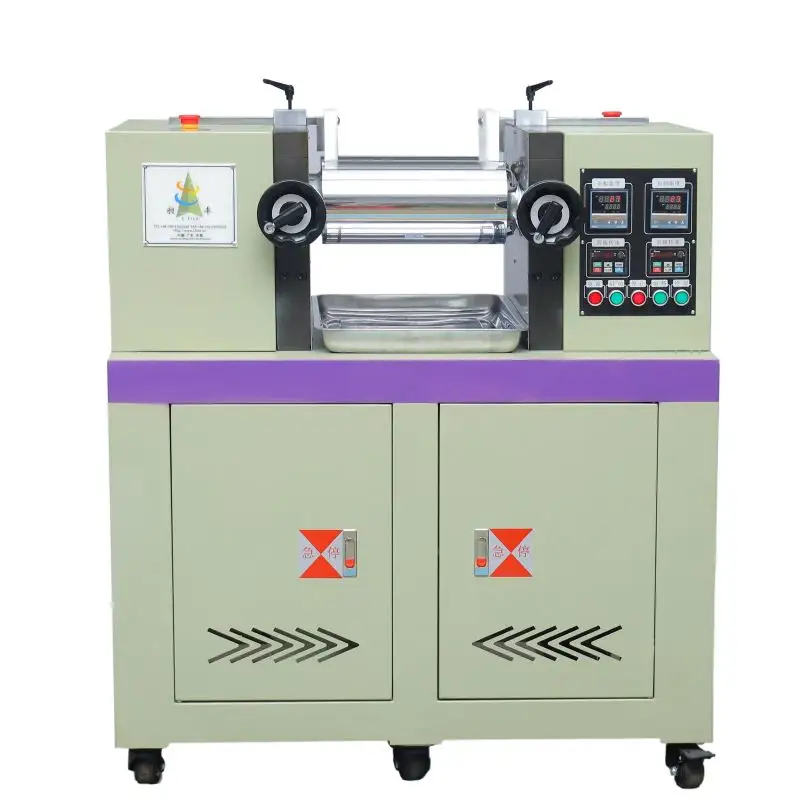
The Critical Role of Mixing Mills in Rubber Processing Efficiency
Modern rubber manufacturing relies on mixing mills to transform raw elastomers into homogeneous compounds ready for shaping and vulcanization. These machines optimize production efficiency by reducing processing times by up to 30% compared to manual methods while ensuring consistent material properties critical for automotive, industrial, and consumer applications.
Understanding the Mixing Mill in Rubber Manufacturing Workflows
Rubber mixing mills basically work by using two rolls that spin in opposite directions to mix and break down materials. The movement between these rolls shears apart long polymer strands and mixes in important ingredients such as carbon black for strength, sulfur for vulcanization, and various chemical accelerators. Industry reports show that when set up correctly, these machines can create compounds that are 98% uniform across the batch after just 8 to 12 minutes of processing time. Getting this kind of consistency matters a lot for passing ISO 9001 inspections since manufacturers need to prove their products meet strict quality requirements throughout production runs.
Principle: How Mixing Mills Enable Compound Homogeneity
The machines’ effectiveness stems from three synchronized actions:
- Mechanical shearing reduces polymer molecular weight for better flow characteristics
- Thermal regulation maintains optimal temperatures (120–160°C) for additive activation
- Geometric compression forces material through progressively narrowing roll gaps
This triad ensures full dispersion of reinforcing agents while preventing premature vulcanization, directly impacting final product tensile strength (+40%) and elongation properties.
Phenomenon: Increasing Demand for High-Performance Mixing Equipment
The global tire industry has started demanding that mills capable of handling at least 500 kg per hour be used to keep up with expected electric vehicle tire needs, which are projected to hit around 450 million units each year by the end of this decade. According to recent research, facilities equipped with these modern milling technologies can complete batches about 18 percent quicker than traditional setups. At the same time, they manage to cut down on energy usage by roughly 22%, thanks largely to those smart torque control systems being implemented across many operations. These improvements make sense when we look at current trends too - about three out of four rubber processing companies have shifted their focus toward upgrading their milling equipment rather than investing elsewhere for capital improvements.
Innovations in Heavy-Duty Mixing Mill Design and Material Integration
Evolution from manual to heavy-duty rubber mixing mill systems
The rubber mixing mill industry has moved away from those old manual methods that required so much hands-on work. Today's machines are fully automated heavy-duty systems that can handle anywhere between 500 to 1,500 kg batches without breaking a sweat. Top manufacturers are putting in variable frequency drives and hydraulic blenders these days, which cuts down on energy usage by around 18 to 22 percent when compared to older equipment according to the Rubber Processing Technology Review from last year. What makes these new systems really stand out is their digital nip gap adjustment feature. This allows them to maintain sheet thickness within just ±0.15 mm tolerance levels. That kind of precision matters a lot for making quality tire treads and other technical rubber components where consistency is everything.
Trend: Integration of wear-resistant materials in roll assemblies
Research from 2023 on additive manufacturing shows that rolls coated with tungsten carbide last about 40 percent longer when working with carbon-black-rich materials than regular steel alloys do. Modern milling equipment is starting to use these advanced roll designs where the surface hardness ranges between 62 and 65 HRC while keeping a tougher core underneath. This helps stop cracks forming even when subjected to massive shear forces around 3,500 kN per square meter. For factories running non-stop, this new approach cuts down how often they need to replace worn-out rolls by nearly half according to industry reports. Manufacturers are definitely taking notice of these improvements in durability and efficiency.
Strategy: Optimizing torque and roll gap for demanding compounds
Progressive manufacturers achieve 94% compound homogeneity through dynamic roll gap adjustments synchronized with real-time viscosity measurements. Key parameters include:
| Factor | Optimal Range | Impact on Quality |
|---|---|---|
| Front Roll Temperature | 55–65°C | Prevents premature curing |
| Friction Ratio | 1:1.15–1.25 | Enhances filler dispersion |
| Specific Energy Input | 0.35–0.45 kWh/kg | Maintains elastomer chain integrity |
Case Study: Performance gains in a Southeast Asian tire plant using reinforced mills
A major tire producer in Thailand upgraded to heavy-duty mills with reinforced sidewalls and intelligent torque limiting, achieving:
- 33% increase in natural rubber throughput (82–109 tons/shift)
- 19% reduction in power consumption per kg mixed compound
- 62% decrease in unplanned downtime related to mechanical failures
Recent industry reports confirm that material innovations in mixing mill design can extend equipment lifespan by 7–10 years while maintaining ±1.5% batch consistency across production runs.
Automation and Smart Manufacturing in Rubber Mixing Mill Operations
From Fully Automatic Mixing Mill Setups to Industry 4.0 Connectivity
Rubber processing facilities across the industry are increasingly turning to fully automated mixing mills equipped with Industry 4.0 features such as IoT sensors and artificial intelligence analytics. The new systems handle everything from measuring out raw materials to controlling temperatures during mixing and ensuring compounds blend properly throughout the process. Plus they allow technicians to check system health remotely when issues arise. According to recent research, implementing these smart technologies cuts down on mistakes made by humans by around 45 percent and makes batches more consistent because all the mixing variables stay standardized. Many of today's advanced mills connect directly with enterprise resource planning systems too, which means operations flow smoothly from initial compounding right through to the extrusion stage that follows.
Principle: Closed-Loop Feedback Systems for Real-Time Process Control
The closed-loop feedback system has really changed how we optimize mixing cycles these days. Inside those rolling parts are sensors keeping tabs on all sorts of stuff - from how thick the material gets to temperature readings within just one degree Celsius, plus torque measurements going as high as twelve kilonewton meters. All this information goes straight into those PLC boxes which then tweak things like rotor speed or cooling down processes automatically. When working with those tough high silica tire treads, this kind of instant adjustment cuts down on curing time inconsistencies by almost 20 percent when compared to older open-loop methods. Makes a big difference in production quality control.
Trend: Cloud-Based Monitoring of Mixing Parameters Across Global Plants
Big name manufacturers are increasingly moving their operations data to the cloud, which lets engineers look at how well mixing processes work at over 15 facilities worldwide all at once. Recent studies from 2023 looked at twelve tire manufacturing sites and found something interesting about cloud systems for predicting equipment issues. These setups cut down on unexpected stoppages by about 22%, mainly because they catch signs of worn bearings in gearboxes before they become serious problems. Another benefit comes from energy management improvements. When companies pair variable frequency drives with cloud-based analytics tools, they actually save around 19% on electricity costs during times when production demand isn't so high. This makes sense both environmentally and economically for businesses trying to stay competitive while reducing waste.
Case Study: IoT-Enabled Mixing Mills Reducing Downtime by 30%
A tire manufacturing facility in Thailand saw its machines running 30% longer between breakdowns when they upgraded old equipment with smart vibration sensors connected wirelessly. These sensors caught unusual torque changes in the rolling shafts anywhere between 8 to 12 hours before actual failures happened, giving technicians plenty of time to fix things during off-hours when production wasn't happening. The whole system based on Internet of Things technology boosted yearly production by around 9,200 metric tons worth of tires, and cut down waste significantly too - scrap levels dropped all the way from 1.8 percent down to just 0.7 percent over the same period.
Precision Control and Customization for Advanced Rubber Compounds
Achieving Batch Consistency Through Precision Control in Rubber Processing
Today's advanced mixing mills can hit around 1.5% consistency between batches thanks to those fancy PID controllers that adjust roll gaps and monitor viscosity as they go. The real magic happens when torque sensors work alongside infrared cameras to keep compound temps just 3 degrees away from what they should be. This matters a lot when working with materials like EPDM or fluorocarbon rubbers where even small temperature swings make big differences. Some factories have started using blockchain for quality checks lately, and according to Rubber Processing Journal from last year, this approach cut down on defects after mixing by nearly 28%. Not bad at all for something that sounds so techy.
Customization of Rubber Compounds for Specialty Applications
Leading manufacturers now offer 15+ polymer base options and 40 additive packages for tailored compound development. A 2023 survey of aerospace rubber suppliers revealed 68% now customize durometer hardness (±5 Shore A) and compression set (<10% @ 150°C) for engine mounting systems. Silicone formulations requiring >300°C thermal stability demand specialized cooling jackets in mixing mill designs.
Example Specialty Compound Customization Matrix
| Property | Automotive Seals | Medical Tubing |
|---|---|---|
| Base Polymer | HNBR | Platinum-Cured Silicone |
| Filler Loading | 45–55 phr carbon black | 25–35 phr silica |
| Critical Tolerance | ±0.3mm dimensions | USP Class VI compliance |
Silicone Rubber Mixing Techniques Requiring Thermal Stability
High-consistency silicone (HCR) mixing requires mills with dual-temperature-zone rollers (front 40°C, rear 130°C) to prevent premature vulcanization. A Southeast Asian medical device manufacturer achieved 99.7% purity grades by implementing ceramic-coated rolls that eliminate iron contamination risks.
Strategy: Adaptive Algorithms for Varying Filler Loadings and Viscosities
Next-gen mixing mills utilize reinforcement learning models that auto-adapt processing parameters every 15 seconds. This technology cut compound scrap rates from 4.2% to 1.8% in carbon fiber-reinforced rubber trials, while reducing energy consumption per batch by 22% (2023 Process Efficiency Report).
Energy Efficiency, Sustainability, and Lifecycle Value of High-Performance Mixing Mills
Energy Efficiency and Sustainability Challenges in Continuous Operation Mills
Rubber processing facilities today are struggling to keep up with the need for higher output while trying to cut down on energy usage. The continuous running mixing mills have real issues with heat management problems, and we're talking about losses as high as 35% from just heat escaping according to some research from ScienceDirect back in 2023. Then there's the whole mess with changing compounds which throws off the torque requirements constantly, putting extra stress on the power systems. This becomes even worse when dealing with materials like silicone or those rubber mixes packed full of fillers. Plants that don't figure out these challenges risk falling behind both competitively and environmentally.
Data Point: Up to 25% Energy Savings With Variable Frequency Drives (VFDs)
Variable frequency drives (VFDs) have become game changers for mixing mill operations, allowing operators to adjust speeds on the fly and cutting down those wasted motor loads by around 18 to 22% when switching between batches. According to research published last year, facilities that upgraded to these intelligent VFD systems saw their energy bills drop by nearly a quarter compared to older fixed-speed setups. The benefits extend beyond just cost savings too. Across the manufacturing sector, companies are finding that these improved drive technologies can slash carbon dioxide emissions anywhere from 6 to 8 metric tons each year for every production line they implement them on. For plant managers watching both their bottom line and environmental footprint, this makes VFD integration a no-brainer investment.
Lifecycle Cost Analysis of High-Performance Mixing Mills
While advanced mixing mills require 12–15% higher upfront investment, their 10-year operational costs prove 30% lower than conventional models. Comprehensive lifecycle assessments show:
- Energy-efficient motors recover additional costs within 18 months
- Precision bearings extend maintenance intervals by 300–400 operating hours
- Automated lubrication systems reduce annual waste oil disposal by 65%
These metrics position high-performance mills as long-term assets rather than operational expenses, particularly in tire and industrial rubber sectors with 24/7 production cycles.
FAQs about Mixing Mills in Rubber Processing
What is the main function of mixing mills in rubber processing?
Mixing mills are designed to transform raw elastomers into homogeneous compounds, ensuring consistent material properties critical for various applications such as automotive and industrial sectors.
How do modern mixing mills optimize rubber processing?
Modern mixing mills are equipped with advanced features like IoT sensors and automated adjustments, allowing for up to 30% reduction in processing times and enhanced compound homogeneity up to 94%.
Why is there an increasing demand for high-performance mixing equipment?
The global demand for tires, especially for electric vehicles, is rising, leading to a need for mixing mills capable of handling higher output efficiently and sustainably.
How do Industry 4.0 features benefit rubber mixing mills?
Industry 4.0 features enable better process control, reduced human errors, and integration with enterprise systems, enhancing overall efficiency and consistency.
Table of Contents
- The Critical Role of Mixing Mills in Rubber Processing Efficiency
- Innovations in Heavy-Duty Mixing Mill Design and Material Integration
- Evolution from manual to heavy-duty rubber mixing mill systems
- Trend: Integration of wear-resistant materials in roll assemblies
- Strategy: Optimizing torque and roll gap for demanding compounds
- Case Study: Performance gains in a Southeast Asian tire plant using reinforced mills
- Automation and Smart Manufacturing in Rubber Mixing Mill Operations
- Precision Control and Customization for Advanced Rubber Compounds
- Energy Efficiency, Sustainability, and Lifecycle Value of High-Performance Mixing Mills
- FAQs about Mixing Mills in Rubber Processing