
 EN
EN
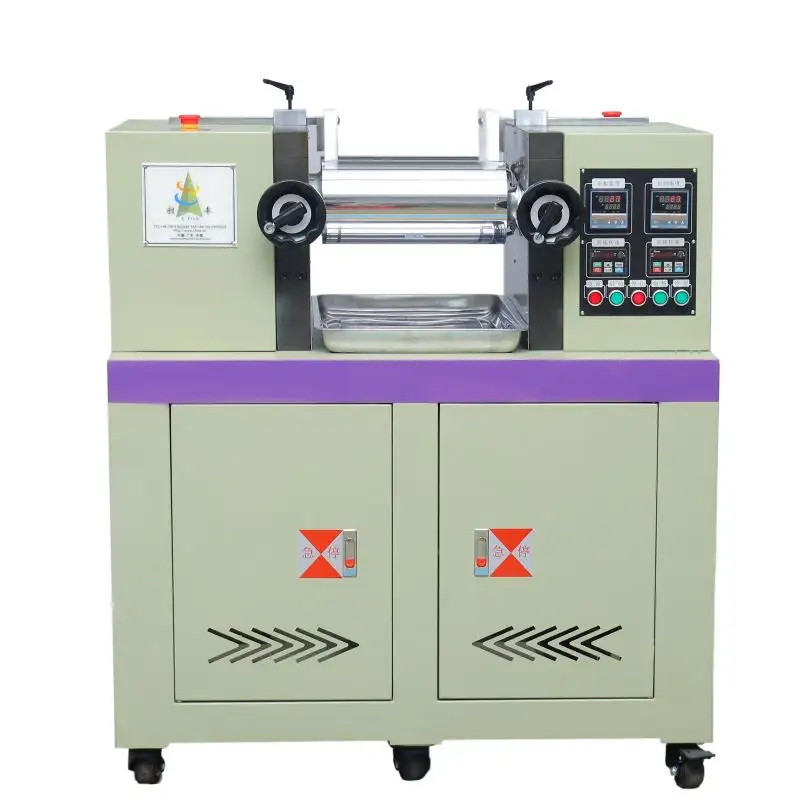
Understanding the Role of Mixing Mill in Rubber Compounding
The fundamentals of rubber compounding and mixing process
The art of rubber compounding turns basic elastomers into materials that actually work by combining polymers, fillers, and various curing agents in specific ways. Getting this right requires careful management of both shear forces and heat levels so everything mixes evenly throughout the batch. Even small variations can make a big difference when it comes to how strong and long lasting the final product will be. According to research published last year in Rubber Chemistry and Technology, tweaking the time ingredients spend in the mixer can boost uniformity by around 40%. That's why top companies spend so much time fine tuning their equipment settings. Most modern plants now feature machinery with adjustable friction controls and variable speed rollers, allowing operators to get just the right mix without wasting too much power in the process.
How two-roll mixing mills ensure batch consistency and process control
Two roll mills today get consistent results because their rolls spin in opposite directions at different speeds. The setup creates shear forces ranging from around 10 to 50 per second, which helps break apart clumps of filler materials without overheating them. Plant workers keep an eye on things like the nip gap size (typically between 0.2mm and 10mm) and how much faster one roll moves compared to the other (usually somewhere between 1:1.1 and 1:1.4). These real time observations let them tweak settings quickly depending on what they're mixing, whether it's thick rubber for tires or softer materials used in making seals out of silicone.
Open-mill vs. internal mixer: Key differences and industrial use cases
For research and development work as well as small batch runs, open mills offer something special when it comes to formulation options. They let workers actually see what's happening and manually add ingredients while things are mixing. On the flip side, internal mixers are where it's at for big volume operations since they can crank out batches 3 to 5 times quicker than open mills for standard compound recipes. Looking at industry data from last year, around 78 percent of specialty rubber makers still keep open mills running for those crucial compounding steps. These older machines just can't be beat when checking quality by hand, something that simply isn't possible with the fully enclosed systems found in modern equipment.
Core Engineering Design of High-Precision Two-Roll Mixing Mills
Roll Speed and Friction Ratio: Optimizing Shear Forces for Effective Mixing
The interplay between roll speed differentials (typically 1:1.1–1.3) and friction ratios determines shear intensity in rubber compounding. Higher friction ratios (>1.25) enhance filler dispersion but risk premature scorching in heat-sensitive compounds. Modern mills incorporate variable frequency drives to fine-tune speed gradients, enabling operators to balance energy input with material-specific thermal limits.
Motor Power Selection Based on Material Viscosity and Roll Load Demands
The motor power needed for lab and production mills typically ranges from 15 to 75 kW, and this depends heavily on how thick the material is and the size of the rolling surfaces involved. Take silicone rubber for instance it needs around 20 percent extra torque compared to regular natural rubber when making similar sized batches. Most engineers rely on these viscosity thickness calculations to avoid problems during operation. If the motor isn't loaded enough, the mixture won't blend properly. But if it's overloaded, the motor might just stop working altogether. That's why most setups include a safety buffer of no more than 15% below maximum capacity as a precautionary measure.
Roll Surface Treatment (Matte Finish) and Its Impact on Material Grip and Dispersion
Matte-finished rolls (Ra 0.8–1.6 μm surface roughness) improve material entrainment by 30–40% compared to polished surfaces, particularly for low-friction compounds like EPDM. This texturing creates micro-eddies that break filler agglomerates while minimizing slippage. However, excessive roughness (>2.0 μm Ra) increases cleaning complexity and wear rates.
Adjustable vs. Fixed Roll Gap Systems: Performance Trade-offs in R&D and Production
| Feature | Adjustable Gap (R&D Focus) | Fixed Gap (Production) |
|---|---|---|
| Accuracy | ±0.01 mm | ±0.05 mm |
| Throughput | 5–10 kg/hr | 50–200 kg/hr |
| Maintenance Interval | 100–150 hours | 400–600 hours |
Adjustable systems enable formulation-specific gap settings but require frequent recalibration. Fixed configurations prioritize throughput stability for large-scale batches.
Laboratory-Scale Precision: Ensuring Accurate Small-Batch Mixing Results
Recent studies demonstrate lab mills achieving ±2% ingredient distribution accuracy in 100g batches through servo-controlled gap adjustments and temperature-stabilized rolls. This precision enables reliable scale-up predictions, with 92% correlation between lab and production dispersion metrics when using identical shear profiles.
Thermal Control and Process Stability in Two-Roll Mixing Operations
Managing roll heating and cooling to preserve rubber compound integrity
Getting the temperature right in those two-roll mixing mills makes all the difference in preventing early vulcanization and keeping compounds at their proper consistency. Most plants still go with electric heating as their main approach, which gets those rolls up to around 200 degrees Celsius for working with thermoplastics, plus or minus about 2 degrees either way. When dealing with materials that generate lots of heat through friction, especially stuff like silica filled rubber mixes, closed loop water cooling becomes absolutely necessary. Some recent studies point out something pretty concerning too. The Rubber Processing Journal from last year found that if temperatures fluctuate too much during processing, antioxidants in the mix can lose between 18 to 22 percent of their effectiveness. That's why so many manufacturers are investing in better temperature controlled roll designs these days, especially when handling delicate formulas where even small variations matter a lot.
Case study: Temperature gradients in lab-scale two-roll mill operations
Research from 2023 on 5 horsepower lab mills found temperature differences running along the axis of uninsulated rolls ranged between 15 and 20 degrees Celsius. These temperature variations led to problems with how fillers spread throughout SBR compounds during processing. When engineers added dual zone heating systems with separate PID controllers, they managed to cut down those temperature swings to just 3 degrees. The improvement made a real difference too - Mooney viscosity measurements stayed consistent across batches by about 37 percent. All this goes to show that keeping temperatures even matters a lot, even when working with smaller research scale mixing equipment.
Advancements in thermal regulation: PID controllers for real-time control
PID controllers these days can make temperature adjustments within fractions of a second by looking at data from roll surfaces and motor loads. The smart algorithms built into these systems handle different materials' heat absorption properties pretty well. This is especially helpful when mills switch between batches of natural rubber, which has high friction, and EPDM, which doesn't react much to shear forces. What makes these modern systems stand out is their ability to maintain just half a degree Celsius stability even when feedstock changes suddenly. Traditional mills with regular thermostats typically see temperature swings ranging from 5 to 8 degrees Celsius under similar conditions.
Optimizing Ingredient Dispersion in Rubber Compounds Using Two-Roll Mills
Achieving uniform dispersion of fillers, curatives, and reinforcing agents in rubber compounds remains a critical challenge in mixing mill operations. Variations in material viscosity, shear sensitivity, and particle size distribution often lead to uneven dispersion—a primary cause of premature product failure in applications like seals and industrial tires.
Challenges in Achieving Uniform Dispersion of Fillers and Curatives
Getting the right balance of shear forces is essential when working with rubber compounds because it helps break apart those stubborn filler clumps while keeping the polymer chains intact. According to recent findings in rubber compounding research published by Warco last year, problems with temperature management or mismatched friction levels between the mixing rolls can actually cut down on how well materials disperse by around 35 percent. Silica particles are particularly tricky to work with since they need very specific shear conditions usually somewhere between 15 to 25 seconds inverse to avoid spots where things get too hot over 120 degrees Celsius. When this happens, the whole vulcanization process gets messed up, leading to weaker final products that don't perform as expected.
Agglomerate Formation: Causes and Prevention During Mixing
Agglomerates form when high-viscosity rubber phases trap filler particles before sufficient shear is applied. A 2023 polymer engineering study identified three key mitigation strategies:
- Pre-mixing fillers with liquid plasticizers (5–8% by weight)
- Maintaining roll temperatures between 60–80°C for natural rubber compounds
- Implementing multiple passes (3–5 cycles) through the mill's nip gap
Best Practices: Step-Wise Addition Protocols for Optimal Ingredient Distribution
Leading manufacturers optimize dwell time by staging ingredient introduction:
- Reinforcing agents added first to exploit maximum shear
- Curatives incorporated mid-cycle to minimize scorch risk
- Oils introduced gradually (2–3 intervals) to balance viscosity
This approach reduces compounding time by 22% compared to bulk loading methods.
Data Insight: 40% Improvement in Dispersion Uniformity with Optimized Dwell Time (Rubber Chemistry and Technology, 2022)
A controlled experiment using carbon black-filled EPDM demonstrated that adjusting dwell time from 90s to 135s increased dispersion uniformity from 54% to 94%, as measured by ASTM D7723-11 standards. The optimized protocol decreased tensile strength variation across production batches by 18.7%, proving critical for aerospace-grade rubber formulations.
Applications of Laboratory-Scale Mixing Mills in Rubber Formulation Development
Advantages of Lab Two-Roll Mills in Rapid Formulation Screening and Testing
The small size of laboratory two-roll mixing mills means scientists can run about three to five times as many different rubber compound tests each week than what's possible with full scale production gear. What makes these labs so efficient is their compact footprint which only needs around 200 to 500 grams of material per batch. This cuts down on wasted materials by roughly three quarters without sacrificing the intense mixing action needed for proper results. Research published in the Rubber Chemistry and Technology journal back in 2022 showed something interesting too. When operators fine tuned how long materials stayed between the rolls in these lab setups, they saw a 40 percent boost in how evenly everything mixed together compared to older techniques. And there's more flexibility here that matters a lot for certain applications. These machines let technicians tweak the friction balance between the rolls from 1:1.1 all the way up to 1:1.4, plus adjust the space between them anywhere from 0.1 millimeters right up to 5 mm. Getting those settings right is absolutely essential when making top quality tire treads or medical grade silicone products where consistency really counts.
Small-Batch Repeatability as a Predictor of Scalable Manufacturing Success
Leading manufacturers report 98% correlation between lab-scale mixing results and production outcomes when using certified laboratory mixing protocols. Key parameters like torque profiles (±2% variation) and dispersion indices (≥95% consistency) prove particularly predictive. For carbon-black reinforced compounds, lab-scale repeatability reduces scale-up trials from 12–15 attempts to just 3–5, accelerating time-to-market by 6–8 weeks.
Balancing Safety and Efficiency in Open-Mill Laboratory Environments
Today's laboratory mills come equipped with various safety enhancements such as magnetic emergency stops that react in just over half a second and infrared sensors that detect when someone gets too close. These improvements don't sacrifice the efficiency needed for proper mixing processes. The adjustable roll guards on newer models cut down on operator contact with materials by around four fifths compared to what was standard before. When it comes to feeding ingredients into these systems, automation has reached remarkable levels where measurements stay within one gram either way. This precision doesn't interfere with the big advantage of open mills: being able to watch the whole process happen right there in front of us. Keeping things at the right temperature remains crucial too. Maintaining roll temps within about 1.5 degrees Celsius helps avoid those frustrating instances where materials start curing too early during long research experiments.
FAQ Section
What is a mixing mill in rubber compounding?
A mixing mill is machinery used in rubber compounding to mix polymers, fillers, and curing agents uniformly.
Why are two-roll mills significant in ensuring batch consistency?
Two-roll mills create shear forces due to opposite spinning rolls at different speeds, helping achieve consistent mixing results.
What distinguishes open mills from internal mixers?
Open mills allow manual ingredient addition during mixing, beneficial for small batches and quality checks, while internal mixers are faster for large batches.
How is thermal control managed in mixing operations?
Temperature management is crucial; electric heating and closed-loop water cooling help maintain optimal compound consistency.
Table of Contents
- Understanding the Role of Mixing Mill in Rubber Compounding
-
Core Engineering Design of High-Precision Two-Roll Mixing Mills
- Roll Speed and Friction Ratio: Optimizing Shear Forces for Effective Mixing
- Motor Power Selection Based on Material Viscosity and Roll Load Demands
- Roll Surface Treatment (Matte Finish) and Its Impact on Material Grip and Dispersion
- Adjustable vs. Fixed Roll Gap Systems: Performance Trade-offs in R&D and Production
- Laboratory-Scale Precision: Ensuring Accurate Small-Batch Mixing Results
- Thermal Control and Process Stability in Two-Roll Mixing Operations
-
Optimizing Ingredient Dispersion in Rubber Compounds Using Two-Roll Mills
- Challenges in Achieving Uniform Dispersion of Fillers and Curatives
- Agglomerate Formation: Causes and Prevention During Mixing
- Best Practices: Step-Wise Addition Protocols for Optimal Ingredient Distribution
- Data Insight: 40% Improvement in Dispersion Uniformity with Optimized Dwell Time (Rubber Chemistry and Technology, 2022)
- Applications of Laboratory-Scale Mixing Mills in Rubber Formulation Development
- FAQ Section