
 EN
EN
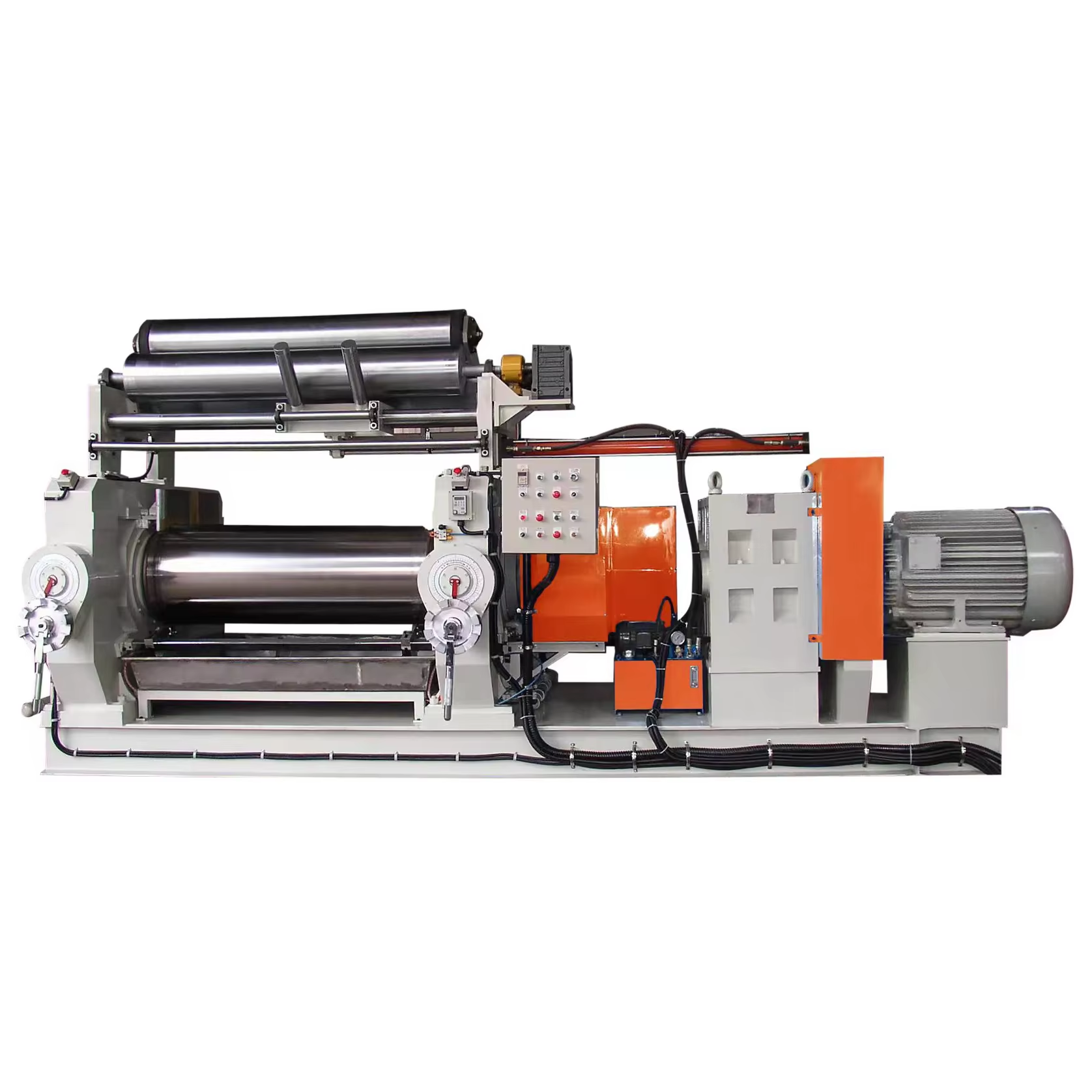
How Adjustable Pressure Enhances Roller Mill Performance
The adjustable pressure system has become pretty much essential for getting good results out of roller mills today. These systems really make a difference when it comes to how much material gets processed, how much power is used, and whether the final product has consistent particle sizes. Fixed pressure setups just don't cut it anymore because they can't adapt to different materials. Operators need to adjust the force between the rollers depending on what they're grinding — harder stuff needs more pressure, wet materials require different settings, and so on. Most plants go with hydraulic systems since they let workers tweak pressures on the fly during operation. But there are also spring loaded options available that work well enough for basic applications where feedstock doesn't change much from batch to batch.
When grinding pressure is properly optimized, it cuts down on energy usage somewhere around 8 to maybe 12 percent compared with those old static setup methods because there's just less friction and heat buildup during operation. Another benefit worth mentioning is that this kind of precision stops the whole system from over processing materials. Some test runs actually showed grain mills could see their throughput jump by as much as 18% when things were set right. These days, smart systems are getting pretty sophisticated too. They combine IoT sensors with all sorts of predictive algorithms so they can tweak the pressure automatically whenever the feed material changes characteristics. Even as those grinding rolls start wearing down over time, these systems keep operations running at their best without anyone needing to constantly monitor everything manually.
In wheat flour milling, proper pressure calibration is essential for preserving endosperm integrity while ensuring clean bran separation—a balance that significantly affects flour quality and yield. Due to these advantages, 67% of milling engineers now prioritize adjustable pressure features when upgrading equipment (Industrial Milling Journal, 2023).
Precision Grinding for Uniform Particle Size Distribution
The Link Between Precision Grinding and Consistent Particle Size
Roller mills generally produce particle size uniformity around 10 to 20 percent, which is actually better than most other methods that usually fall somewhere between 25 and 40 percent according to the Feed Processing Study from 2023. When products are consistently sized, their performance improves significantly. Take wheat flour as an example – if there's about plus or minus 5 percent variation in particle size, the dough tends to lose roughly 12 percent of its elasticity, something Food Tech Journal reported back in 2024. What makes roller mills so effective is how they work through compression, naturally reducing those oversized particles that can be problematic. For industries like pharmaceuticals where quality control is critical, this matters a lot. Most manufacturers require at least 98 percent of their output to stay below five micrometers, and roller mills help them hit those tough specs without constant adjustments.
Adjustable Roller Gap and Material Bed Control for Uniform Output
Modern roller mills combine micro-adjustable gaps, material bed sensors, and counter-rotating rolls to ensure consistent output:
| Feature | Function | Impact on Output |
|---|---|---|
| Micro-adjustable gaps | 50-micron resolution adjustments | Controls maximum particle diameter |
| Material bed sensors | Real-time mass flow monitoring | Maintains compression force ±2% |
| Counter-rotating rolls | Adjustable speed differential | Reduces fines by 18–22% (2023 trials) |
Hydraulic gap adjustment allows continuous compensation for variations in material hardness—something static spring-based systems cannot achieve.
Fixed vs. Variable Gap Systems: Performance Comparison in Industrial Applications
A 12-month study across 17 mills found that variable-gap roller mills delivered significant improvements:
- 23% higher throughput in maize processing
- 15% lower energy use per ton
- 40% fewer product recalls due to out-of-spec particles
This flexibility is especially valuable when processing diverse materials—from brittle minerals (Mohs 3–4) to fibrous agricultural residues—where optimal force ranges vary by 300–400 kN/m².
Core Working Principles of Roller Mill and Compression Dynamics
Working Principle of Roller Mill: From Feed to Final Product
Roller mills take large chunks of material and break them down into consistently sized particles using controlled mechanical force. When raw material comes into the feed system, it gets pushed toward the small space between those big rotating rollers that spin in opposite directions. These rollers aren't exactly matched speed-wise either they usually run at around 5 to 15 percent difference in rotation rate. This creates both pressure and shearing forces that actually split the material apart right where it naturally wants to break. Most modern setups have automated hydraulic systems that can adjust the gap between these rollers down to just 0.1 millimeters. This level of precision means operators can fine tune the final particle size while also compensating for normal wear and tear over time. Maintenance crews really appreciate this feature because it extends equipment life and keeps production specs tight even after months of continuous operation.
Role of Compression, Friction, and Shear Forces in Material Breakdown
Three interrelated forces drive size reduction:
- Compression: Vertical pressure from the rollers crushes particles against the grinding bed
- Shear: Speed differences between rolls create a slicing effect, particularly effective on fibrous materials
- Friction: Surface texture and rotational drag aid in particle disintegration
According to a 2023 comminution study, optimizing this force balance reduces energy consumption by 18–22% compared to single-force methods. It also limits temperature rise to under 3°C in cereal processing, preserving sensitive components like starch structure in grains.
Force Transmission and Structural Design in High-Efficiency Roller Mills
The best roller mills out there typically feature hardened alloy rollers rated at Rockwell C 58 to 62, which are mounted on those special self-aligning bearings. This setup helps spread the pressure evenly across those big grinding areas that range from 200 to 800 millimeters wide. The frames themselves are pretty impressive too, made from robust cast steel with walls between 8 and 12 mm thick. These can handle compression forces well over 5 kN per square centimeter without buckling. Some of the newer, more advanced models come equipped with these strain gauge sensors arranged in arrays. They constantly watch how forces are distributed during operation. When they detect any changes, the system makes automatic adjustments so the end product stays within about 2% consistency, even when dealing with materials that have different densities throughout the batch.
FAQ
What is the importance of adjustable pressure in roller mills?
Adjustable pressure is crucial in roller mills to ensure optimal processing of different materials, reduce energy consumption, and maintain consistent particle size and system efficiency.
How does precision grinding improve particle size distribution?
Precision grinding reduces oversized particles, leading to uniform particle size distribution which enhances product quality and performance, especially in industry applications with strict quality control requirements.
How do modern roller mills maintain uniform output?
Modern roller mills use features like micro-adjustable gaps, material bed sensors, and counter-rotating rolls to maintain uniform output by controlling particle size and compression forces.
What are the advantages of variable gap systems over fixed systems?
Variable gap systems provide flexibility and efficiency in processing diverse materials, enabling higher throughput, lower energy consumption, and fewer product recalls compared to fixed systems.