
 EN
EN
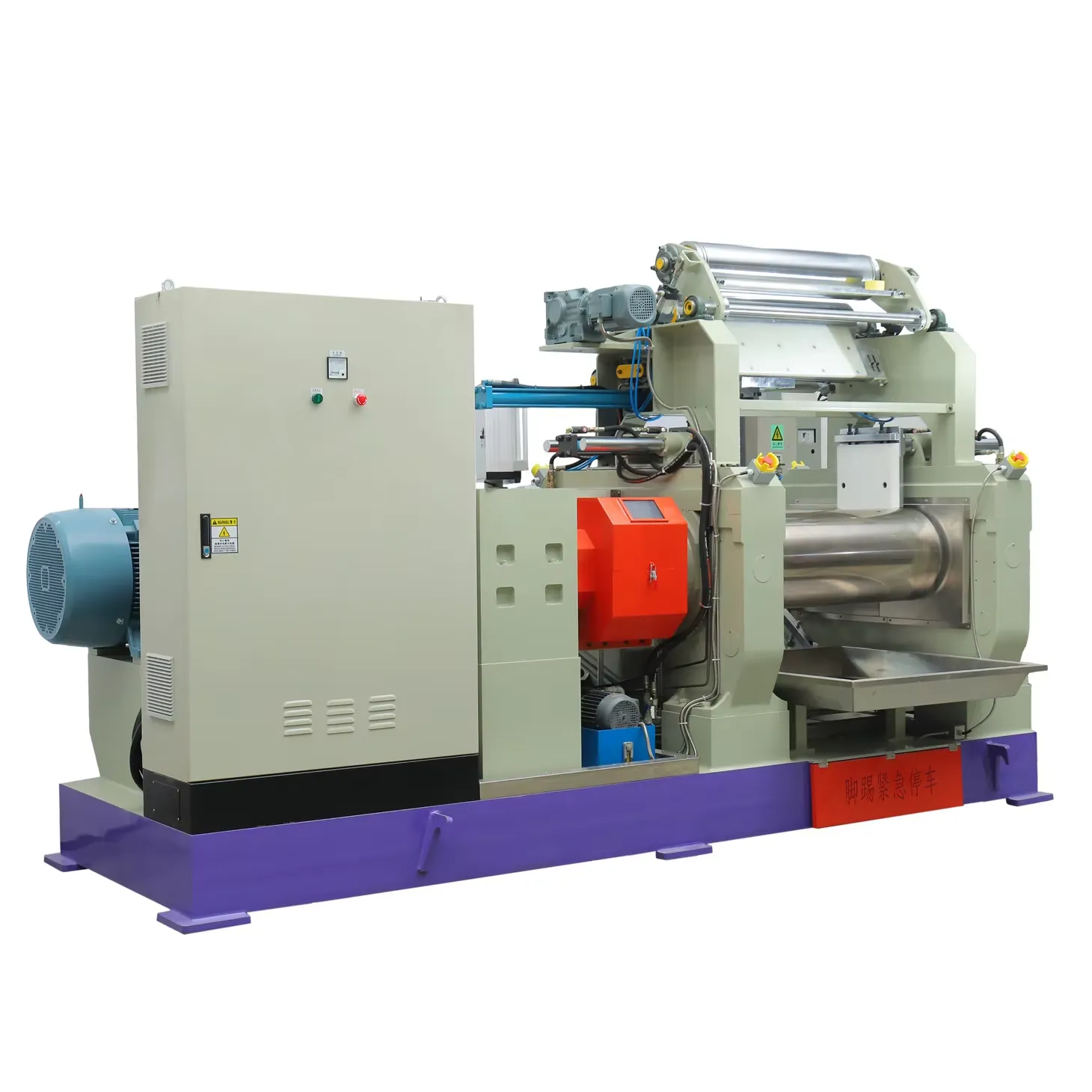
Roller Mill Fundamentals: Working Principle and Core Components
Understanding the core working principle of roller mills in industrial settings
Roller mills work by squeezing materials between spinning cylinders that are carefully positioned relative to each other. When raw material gets fed into the grinding area, it meets up with these counter rotating rollers which spin at different speeds usually somewhere around 1 to 1.5 or even 1 to 3 speed differences. The combination of pressure and friction from this setup breaks down the material as it passes through. What makes roller mills stand out compared to regular crushers is their ability to create much finer particles without wasting as much energy. Many manufacturers have found that switching to roller mill technology gives them better results in terms of product quality while keeping power consumption lower over time.
Key components: rollers, bearings, housing, and drive mechanisms
Four structural elements form the operational backbone of industrial roller mills:
| Component | Critical Function | Performance Feature |
|---|---|---|
| Hardened alloy rollers | Direct material contact and size reduction | Surface hardness up to 65 HRC |
| Tapered roller bearings | Support rotational loads up to 180 kN | 20,000-hour operational lifespan |
| Reinforced steel housing | Maintain alignment under vibrational stress | 30% thicker walls than conventional models |
| Multi-stage drive system | Deliver 50—1,200 RPM adjustable speed control | 92% energy transfer efficiency |
Integrated functions: grinding, drying, classification, and material transport
Modern roller mills combine multiple processing stages into cohesive systems:
- Grinding: Primary particle reduction through roller compression
- Drying: Simultaneous heat transfer removes 12—15% material moisture (Thermal Processing Journal 2023)
- Classification: Integrated air separators recycle oversize particles
- Transport: Pneumatic conveyors move processed materials to storage
This vertical integration reduces energy consumption by 25—40% compared to standalone systems while maintaining continuous production flow.
Ensuring Continuous Production with Precision and Automation
Achieving Uninterrupted Operation Through Precision Control and Adjustment
Automated roller gap adjustments and bearing load sensors enable mills to self-correct during operation. Hydraulic positioning systems respond to temperature fluctuations within 0.5 seconds, preventing roller misalignment that historically caused 23% of unplanned stoppages. These closed-loop systems reduce human intervention, ensuring 24/7 operation even with abrasive or high-moisture materials.
Speed and Process Optimization for Consistent Output Quality
The variable speed drives match up roller movement with how fast materials are fed into the system, taking into account things like how hard the material is and how wet it gets. These smart systems check out the particle sizes roughly every half minute and tweak the roller speeds up or down around 5 RPM as needed to stay within quality standards. Getting this right cuts down on wasted power somewhere between 12% to maybe even 18%, which makes a big difference over time. Plus, the consistent product coming out means everything runs smoother when it heads toward the kiln for further processing.
Closed-Circuit Grinding Systems With Automated Stability Controls
Modern closed-circuit configurations integrate airflow sensors that maintain 2.5—3.0 m/s material transport velocities, dynamic separator adjustments optimizing 45—200 µm particle ranges, and automated recycle rate controls limiting overgrinding to less than 8%. These systems achieve 98% uptime in cement plants by preventing material buildup and pressure surges.
Integration of Automation and Robotics in Modern Roller Mill Operations
During planned maintenance periods, robotic arms handle around 87 percent of all roller resurfacing work and finish these tasks about 40% quicker than what human teams typically manage. The Internet of Things has brought us vibration sensors that can spot potential bearing problems well over two days ahead of time. At the same time, smart lubrication systems powered by artificial intelligence cut down on wasted energy from friction by roughly 22%. When manufacturers combine these robotic solutions with advanced data analysis techniques, they're seeing their mills last anywhere between three to five extra years when compared against older methods of operation.
Efficiency, Durability, and Operational Advantages of Roller Mills
Energy Efficiency and Low Power Consumption in Grinding Processes
Roller mills today cut down on energy usage somewhere around 25 to 30 percent when compared with older hammer mill technology thanks to better compression grinding techniques. According to industry reports, these machines typically save about 4 to 6 kilowatt hours per ton processed, bringing operational costs down to roughly 9 to 15 euros per ton for continuous running. What makes them so efficient? Well, there's the way materials get compressed directionally which cuts back on unwanted heat buildup. Then we have less air loss because particles stay within certain size ranges, plus those fancy variable frequency drives that manage power consumption smarter than ever before.
| Efficiency Metric | Roller Mill | Hammer Mill |
|---|---|---|
| Energy Use (kWh/ton) | 9—15 | 12—20 |
| Heat Generation | ’50°C | 80—120°C |
| Annual Cost Savings* | €18k—30k | — |
| *Based on 10-ton/hour capacity at €0.12/kWh |
Long-Term Durability and Cost-Effectiveness of Industrial Roller Mills
Wear-resistant rollers last 2,000—5,000 operational hours—up to ten times longer than hammer mill components. Lifecycle studies (2023) reveal 35—40% lower five-year ownership costs due to reduced spare part replacements, 30% lower maintenance labor requirements, and compatibility with automated wear monitoring.
Handling High-Viscosity and Challenging Materials with Ease
Roller mills maintain 98% operational uptime when processing materials with viscosity ratings up to 50,000 cP. Advanced grooved roller designs increase material traction by 40% compared to smooth surfaces, enabling reliable processing of moisture-rich biomasses (18—22% water content), shear-sensitive pharmaceuticals, and temperature-sensitive food-grade materials.
Real-Time Monitoring and Control Systems for Enhanced Productivity
Integrated IIoT sensors improve throughput by 12—18% through vibration analysis predicting bearing failures 72+ hours in advance, automated gap adjustment maintaining ±0.1mm roller positioning accuracy, and instantaneous power tracking with less than 2% margin of error. These capabilities support ISO 50001 energy management compliance and reduce unplanned downtime by 60% versus manual monitoring.
Industrial Applications Across Cement, Metallurgy, and Power Sectors
Widespread Use in Cement, Power Plants, and Non-Metallic Mineral Processing
Around 60 percent of clinker grinding happens through roller mills these days according to Industry Insights 2024 data. These machines process materials like limestone, slag, and gypsum at impressive rates sometimes pushing past 500 tons per hour while keeping particles under 45 microns. When it comes to power generation, vertical roller mills actually outperform traditional ball mills by about 15 to 20 percent for coal pulverization efficiency. Mineral processing companies rely on these systems too, especially for creating high quality calcium carbonate, barite, and feldspar powders. They manage to maintain moisture levels at two percent or less even when dealing with really abrasive feedstocks, which makes them indispensable in many industrial applications.
Case Study: Roller Mill Applications in Steel and Metallurgical Processing
According to a recent study from 2023 looking at operations at a steel complex in Southeast Asia, they discovered something interesting about their roller mills. These machines actually cut down on energy usage by around 22 percent when dealing with slag processing as opposed to traditional crushers. At this particular plant, they handle approximately 1,200 metric tons per day of blast furnace slag turning it into materials used for cement production. Their system works with dual pressure grinding technology which gets most of the particles below 32 microns in size. More and more metallurgical facilities are starting to switch over to these hybrid roller mill setups for preparing ores. The idea is simple enough really - combine impact crushing with precise grinding techniques so that valuable minerals can be separated out while keeping unwanted siliceous gangue materials at bay. What makes this method worth adopting? Well, companies report saving between 18 to 25 percent on those costly flotation reagents thanks to better mineral surfaces being exposed during processing (as noted in Metallurgical Engineering Review 2023). And there's another benefit too. With real time sensors measuring material hardness, operators can adjust roller gaps dynamically, ensuring consistent output even when working with different types of iron ores or various kinds of recycled metals coming into the system.
Future-Ready Roller Mills: Industry 4.0, AI, and Predictive Maintenance
AI-driven optimization and anomaly detection in roller mill performance
Grinding operations get smarter when AI steps in to adjust pressure settings and control feed rates on the fly. Smart systems look at both past performance data and what's happening right now to spot problems before they cause major issues. For instance, these systems catch unusual vibrations or strange flow patterns that might otherwise lead to unexpected shutdowns. According to the Industry 4.0 Manufacturing Report from 2024, advanced neural network setups have proven pretty good at forecasting roller wear too, hitting around 92% accuracy mark. This means maintenance teams can address potential failures much earlier without needing to completely shut down the production line for repairs.
Predictive maintenance using IoT sensors and data analytics
IoT-enabled mills deploy vibration, thermal, and acoustic sensors to monitor bearings and gearboxes. Data feeds into analytics platforms that forecast maintenance needs 30—45 days in advance, reducing downtime by up to 50% compared to fixed schedules. Mills using this approach achieve 18% longer service intervals for grinding rollers (Smart Manufacturing Journal, 2023).
Digital twins and cloud-based platforms for performance forecasting
Digital twin technology creates virtual replicas of roller mills, simulating responses to raw material variations or throughput changes. Cloud-based dashboards aggregate performance metrics across facilities, enabling benchmarking and centralized optimization. A 2024 analysis found plants using these tools improved energy efficiency by 12% through real-time process adjustments.
Sustainable manufacturing: energy recovery and emission reduction strategies
Modern mills now come equipped with waste heat recovery systems that grab around 65 to 70 percent of the thermal energy generated during grinding processes. This captured heat gets put back into work for things like drying materials or heating buildings. When paired with smart AI systems that optimize how much power gets used throughout operations, factories can cut down their carbon footprint by roughly 25% for every ton they process according to a report published in Sustainable Production Review last year. Many facilities also implement closed loop water systems where water circulates through the plant multiple times before being treated and reused. Particulate filters catch dust particles that would otherwise escape into the air, keeping both workers safe and reducing environmental impact. These practices aren't just good for the planet either they often save companies money on utility bills over time as well.
FAQ
What is the primary benefit of roller mills over traditional crushers?
Roller mills offer the ability to create much finer particles and achieve better product quality while maintaining lower power consumption compared to traditional crushers.
How does automation enhance the operation of roller mills?
Automation reduces human intervention, ensuring continuous operation by self-correcting during operation through hydraulic positioning systems and automated adjustments.
What role does AI play in roller mill performance?
AI-driven systems optimize grinding operations by adjusting pressure settings, identifying anomalies, and predicting maintenance needs, enhancing performance and reducing downtime.
How do roller mills contribute to sustainable manufacturing?
Roller mills incorporate waste heat recovery systems and AI-driven power optimization to reduce emissions and energy consumption, supporting sustainable manufacturing practices.
Why are roller mills preferred in high-viscosity material processing?
Advanced grooved roller designs increase traction, facilitating reliable processing of challenging materials with high viscosity or moisture content without compromising uptime.
Table of Contents
- Roller Mill Fundamentals: Working Principle and Core Components
- Ensuring Continuous Production with Precision and Automation
- Efficiency, Durability, and Operational Advantages of Roller Mills
- Industrial Applications Across Cement, Metallurgy, and Power Sectors
- Future-Ready Roller Mills: Industry 4.0, AI, and Predictive Maintenance
-
FAQ
- What is the primary benefit of roller mills over traditional crushers?
- How does automation enhance the operation of roller mills?
- What role does AI play in roller mill performance?
- How do roller mills contribute to sustainable manufacturing?
- Why are roller mills preferred in high-viscosity material processing?