
 EN
EN
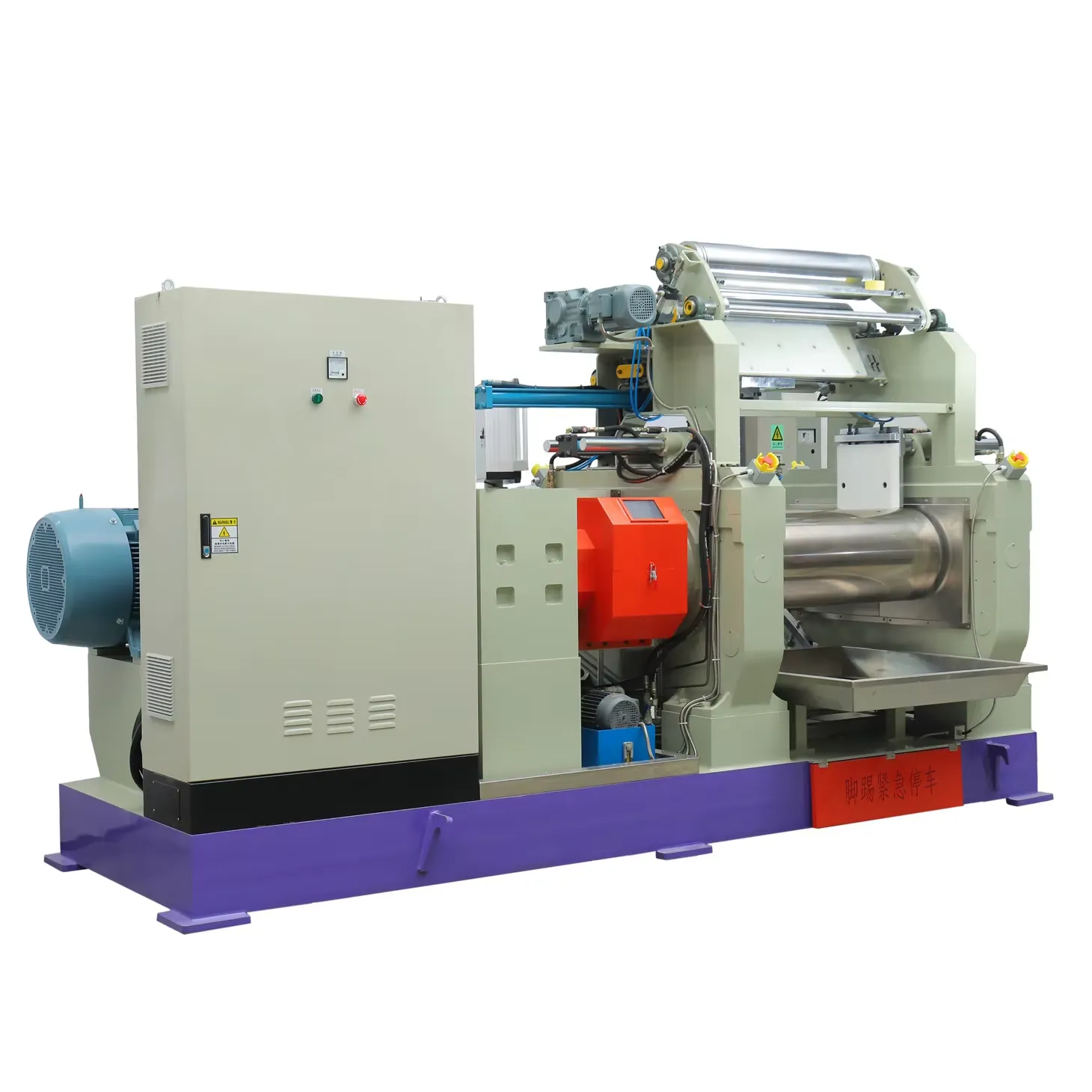
Why High-Efficiency Roller Mills Are Transforming Industrial Grinding
The Rise of the Roller Mill in Modern Fine Grinding Applications
The cement and mineral processing sectors have increasingly turned to roller mills in recent years. According to the Industrial Minerals Report for 2023, around three out of four new setups for fine grinding below 300 mesh are going with roller systems instead of older equipment. Hammer mills work differently by smashing materials together, but roller mills squeeze and shear them across grinding surfaces. This gives them a real edge when it comes to reducing particles down to sizes between 150 and 3000 mesh while keeping the material's crystal structure intact. That makes all the difference in applications like producing pharmaceutical grade talc or handling massive volumes of coal for power plants where maintaining material properties is absolutely essential.
Energy Efficiency Advantages Over Traditional Hammer and Ball Mills
Compared to traditional ball mills of similar capacity, roller mills actually use about 35 to 50 percent less energy. They achieve this because they eliminate all that wasted kinetic energy from those flying grinding media pieces. Plus, they have these cool regenerative drive systems that actually capture and reuse the energy when the rollers slow down. For industries trying to cut carbon emissions, this makes a big difference. And let's talk numbers too - companies can save anywhere between $3.80 and $7.20 on electricity costs per ton processed. That kind of savings really matters now when energy prices are bouncing around so much. No wonder more manufacturers are looking at roller mills as their go to solution these days.
Meeting Industrial Demand for Stable Output and 150–3000 Mesh Fineness
Today's systems manage to hit around 5% consistency in their output thanks to a trio of working together technologies. First there's the smart roller gap control system which can adjust gaps down to about 0.01 millimeters using hydraulics. Then we have AI that works out the best feed rates based on how hard different materials are when they come into contact with the rollers. And finally, there are these closed circuit classifiers that keep recycling any oversized particles until they reach the desired fineness level. All this matters because industries need increasingly precise powders these days. Battery manufacturers want stuff between 2500 and 3000 mesh while construction companies typically require particle sizes from 150 to 600 mesh. With all these requirements, it's clear why roller mills are becoming so important for future material processing needs across various sectors.
Core Working Principles of Roller Mill Design and Operation
Compression and Shear Forces in Material Bed Grinding for High Efficiency
Roller mills crush particles between rotating rollers and a grinding table using both vertical compression forces (typically 50–150 MPa) and horizontal shear forces. This dual-force mechanism increases particle fracture rates by 40–60% compared to single-force systems while minimizing overgrinding—especially beneficial when producing fine powders in the 150–3000 mesh range.
How Roller Gap Adjustment Enables Precise Control and Consistent Output
Operators maintain product uniformity through dynamic roller gap adjustments with ±0.1mm accuracy. Real-time tuning compensates for feed material variability, surface wear, and throughput fluctuations, ensuring stable performance.
| Adjustment Parameter | Impact on Output | Energy Effect |
|---|---|---|
| Roller Pressure | Fineness Control | ±15% kWh/t |
| Grinding Table Speed | Throughput Rate | ±20% kWh/t |
| Airflow Velocity | Particle Sorting | ±10% kWh/t |
These controls help maintain <15% output variation during continuous operation—critical for industries like cement manufacturing that require consistent slurry quality.
Low Energy Consumption Mechanisms Compared to Ball Milling Systems
Compared to ball mills, roller mills use somewhere between 30 and 50 percent less energy when producing similar outputs according to the U.S. Department of Energy report from 2023. Why? Well, they apply force directly onto the material being processed, incorporate airflow systems that cut down on recirculation issues, and feature hybrid drive systems where hydraulic pre-pressing works alongside electric grinding motors. When we look at actual performance metrics, cement manufacturers typically see consumption rates dropping from around 4.5 to 6.5 kWh per ton down to just 2.8 to 3.2 kWh per ton for raw meal grinding operations. These efficiency gains have made roller mills the go to choice across most mineral processing facilities and cement plants these days, as companies continue to prioritize operational cost savings without compromising production quality.
Vertical Roller Mill Optimization in Cement Grinding: A Real-World Application
Energy-Saving Retrofits and Reduced Power Consumption in Cement Plants
The latest vertical roller mill (VRM) setups cut down on energy usage around 18 to 22 percent when we compare them to traditional ball mills. These mills come with smart automation features that let operators tweak things like grinding pressure and roller speeds as needed. This makes a big difference too since it can slash idle power consumption by nearly 35% whenever there are changes in feed rates. And if companies also implement predictive maintenance strategies that watch for unusual vibrations in the mill, they often see another 12 to 15% saving each year without having to spend money on expensive new equipment. Many plants find these improvements make sense both economically and environmentally.
Integrated Grinding and Drying Processes for Improved Operational Stability
When grinding and thermal drying happen together in one VRM unit, there's no longer a requirement for those extra dryers sitting around unused. This combo cuts down on wasted heat energy by about 27%, according to findings from the Cement Industry Efficiency Report published back in 2023. The process works best when we inject controlled amounts of hot air between roughly 180 and 220 degrees Celsius. This keeps everything flowing smoothly through the system while making sure the final powder stays nice and dry with moisture levels under 500 micrometers. Getting this right is actually pretty important because it makes all the difference in how well the material stores over time and how reactive the clinker becomes during processing.
Closed-Circuit Grinding Systems for Sustained, High-Volume Output
Closed-loop VRM configurations with dynamic separators achieve 98.5% recirculation efficiency, supporting continuous production of 150–800 mesh cement powder at 65–85 t/h. Trials show these systems sustain <2% output variance over 72-hour runs, with wear-resistant alloy rollers exhibiting erosion rates under 0.01 mm/hr under standard operating pressures of 50–70 MPa.
Intelligent Control and Precision Classification for Consistent Fineness
Real-Time Intelligent Control Systems Optimizing Roller Mill Performance
IoT sensors and machine learning algorithms monitor over 25 operational parameters—including vibration, motor load, and feed dynamics—to automatically adjust roller pressure and rotational speed. Mills equipped with adaptive control systems demonstrate 18% better fineness consistency and 12% lower energy use compared to manually operated units, according to a 2023 industry study.
Advanced Classifiers and Precision Classification for Granulometry Control
High-efficiency dynamic classifiers leverage centrifugal forces and optimized airflow to achieve 95% separation accuracy in a single pass. Unlike sieve-based methods, they allow real-time adjustment of particle size distribution within ±3% tolerance, reduce oversize recirculation by 40%, and minimize energy waste through intelligent airflow management.
Ensuring Uniform Particle Size Distribution in Fine Grinding (150–3000 Mesh)
Integrated laser particle analyzers work with auto-compensating roller gap systems to maintain narrow granulometry bands. Data shows optimized setups sustain 150–3000 mesh specifications for 83% longer between maintenance cycles than conventional systems, enhancing both product quality and operational uptime.
Strategies for Maximizing Output and Long-Term Operational Stability
Dynamic parameter adjustment for optimal grinding efficiency and fineness
Automated control systems continuously tune roller pressure, gap, and speed based on real-time analysis of feed characteristics, maintaining < 5% deviation in product fineness across the 150–3000 mesh spectrum. Cement plants applying adaptive protocols report 18–22% reductions in specific energy consumption compared to fixed-parameter operations.
Balancing throughput, wear resistance, and maintenance in continuous operation
Tungsten-carbide overlays on grinding rollers extend service life by 40% in abrasive environments. A structured maintenance approach—featuring daily lubrication checks, weekly torque calibration, and vibration analysis every 500 hours—reduces unplanned downtime by 67% in slag-processing VRMs. This strategy sustains 92–95% operational availability while keeping wear-related costs below $0.12/ton.
System-wide optimization to reduce power use and enhance product quality
Closed-circuit grinding with dynamic classifiers cuts recirculation loads by 30–50%, lowering fan energy demands. In mineral processing, integrated grinding-drying systems reclaim 15–20% of exhaust heat, reducing thermal energy use by 1.2–1.8 GJ/ton. Together, these optimizations enable limestone grinding at <2.5 kWh/ton while consistently meeting PSD requirements over extended 72-hour production cycles.
FAQs
1. What are the main advantages of roller mills over traditional hammer and ball mills?
Roller mills are more energy-efficient, using 35-50% less energy than traditional mills. They also maintain the material’s crystal structure, which is crucial in applications requiring fine particle sizes.
2. How do roller mills contribute to energy savings?
Roller mills capture and reuse energy, reducing wasted kinetic energy. This results in substantial electricity savings, cutting costs by approximately $3.80 to $7.20 per ton processed.
3. Why is maintaining material properties critical in roller mill applications?
For sectors like pharmaceuticals and power plants, retaining material properties ensures the effectiveness of the end product produced using those materials.
4. How do AI and automation enhance roller mill performance?
AI optimizes feed rates and adjusts roller gaps for consistent output, while smart automation minimizes idle power consumption and enhances fineness consistency.
Table of Contents
- Why High-Efficiency Roller Mills Are Transforming Industrial Grinding
- Core Working Principles of Roller Mill Design and Operation
- Vertical Roller Mill Optimization in Cement Grinding: A Real-World Application
- Energy-Saving Retrofits and Reduced Power Consumption in Cement Plants
- Integrated Grinding and Drying Processes for Improved Operational Stability
- Closed-Circuit Grinding Systems for Sustained, High-Volume Output
- Intelligent Control and Precision Classification for Consistent Fineness
- Real-Time Intelligent Control Systems Optimizing Roller Mill Performance
- Advanced Classifiers and Precision Classification for Granulometry Control
- Ensuring Uniform Particle Size Distribution in Fine Grinding (150–3000 Mesh)
- Strategies for Maximizing Output and Long-Term Operational Stability
- FAQs