
 EN
EN
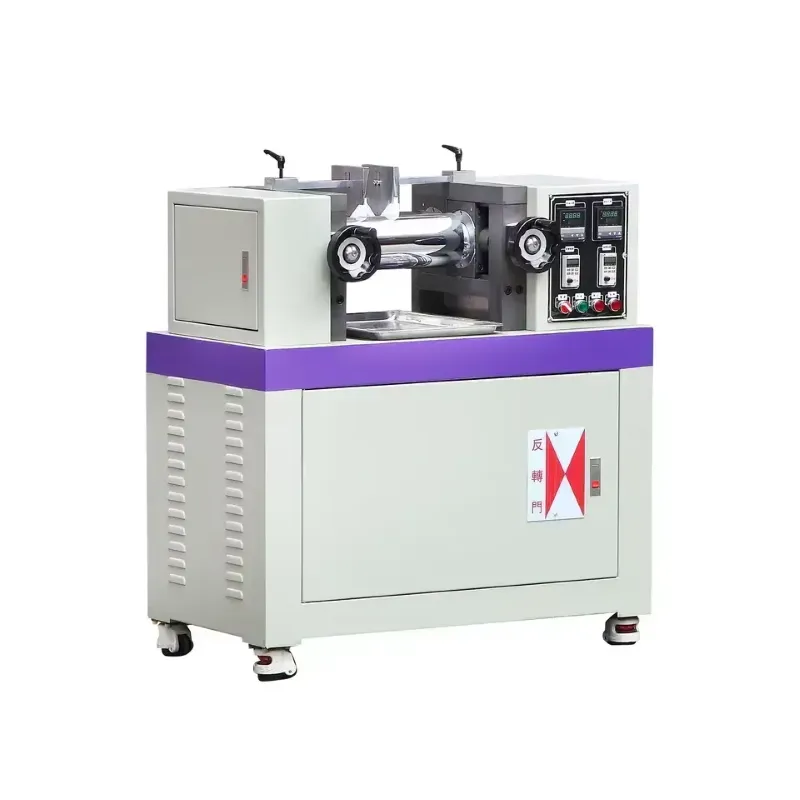
Achieving Uniform Blending with Mixing Mill Technology
Understanding the Importance of Uniform Blending in Plastic Processing
When materials blend uniformly, polymer chains line up properly and additives spread evenly throughout the mix, which makes a big difference in how the melted plastic flows. If mixing isn't right, we end up with weak spots where parts join together in injection molding plus patches of inconsistent color. These issues account for around one third of all rejected products in thermoforming according to recent industry reports from Plastics Technology. Looking at actual shop floor numbers, better material consistency even by something as small as 12 percent cuts down on waste after processing, saving mid size manufacturing operations approximately eighteen thousand dollars each year. Modern blending techniques incorporate special monitoring systems during the compounding process to stop fillers from clumping together, ultimately leading to higher quality products while making operations run smoother overall.
How Mixing Mill Enhances Material Homogeneity and Additive Dispersion
The latest generation of mixing mills features dual counter rotating rotors spinning between 250 to 400 RPM. These machines create intense shear forces that really tear apart those stubborn polymer clusters. When it comes to getting those tiny sub 50 micrometer additives properly dispersed, these modern systems hit around 95% efficiency mark. That's way better than what old school ribbon blenders can do, which barely reach 68%. Some studies have shown interesting results too. Glass fiber reinforced polypropylene composites made using these high shear mills actually show about 22% stronger tensile properties. Why? Because the fibers end up oriented much better throughout the material and spread out more evenly instead of clumping together. Makes sense when thinking about how important uniform distribution is for final product quality.
Impact of Blending Uniformity on Final Product Quality
Batches produced with ±3% density variation from mixing mills demonstrate measurable improvements in critical performance metrics:
| Property | Improvement vs. Manual Mixing |
|---|---|
| Impact Strength | 19% Increase |
| Surface Finish | 41% Fewer Defects |
| Dimensional Stability | 27% Tolerance Tightening |
These enhancements support compliance with stringent automotive OEM standards requiring less than 0.8% property deviation across production lots.
Case Study: Improved Output Consistency Using Precision Mixing Mill
A PVC pipe manufacturer reduced extrusion die pressure fluctuations from ±18 bar to ±3 bar after installing a computer-controlled mixing mill. By synchronizing rotor speed with real-time torque feedback, the system maintained stable melt viscosity, cutting energy costs by $7.2k/month and achieving 99.3% diameter consistency over 10,000 meters of production.
Trend Toward Automation in Mixing Mills for Consistent Blending
Next-generation mixing mills utilize AI-driven predictive algorithms that automatically adjust blade clearance based on real-time viscosity measurements. This innovation reduces manual calibration errors by 73% and sustains ±1.5% batch homogeneity—essential for medical-grade polymers requiring USP Class VI certification.
Maximizing Mixing Efficiency and Reducing Processing Time
Evaluating Mixing Efficiency in Plastic Manufacturing Workflows
The effectiveness of mixing really comes down to how well additives spread throughout the material while using as little energy as possible. Mills designed for high performance typically check their work with things like torque rheometry and melt flow tests to make sure the polymers and fillers actually mix properly. Industry insiders point to a recent 2023 finding showing that when manufacturers switch to high shear mixing tech for PVC blends, they see around 22% less thermal damage than with older methods. This makes sense because less degradation means fewer rejects overall, which saves money and time on the production floor.
Reducing Processing Time Through Optimized Mixing Mill Design
Dual-rotor systems with intermeshing geometries increase material turnover rates by 40–60%, accelerating blend uniformity. The integration of automated dosing systems eliminates manual weighing errors and cuts batch preparation time by 18 minutes per cycle. Temperature-controlled chambers also prevent premature curing, a key advantage when processing heat-sensitive engineering plastics like ABS.
Data Insight: 30% Reduction in Cycle Time with High-Shear Mixing Mill
An industry trial showed polyolefin processors achieved 98% additive dispersion within 90-second cycles using counter-rotating mixing mills—a 30% improvement over standard single-rotor systems. This efficiency gain translates to annual energy savings exceeding $74,000 for medium-scale operations running 20 batches daily, as validated in rubber compounding applications.
Handling Diverse Plastic Materials and Additives Effectively
Challenges in Blending Different Physical Forms: Powders, Pellets, and Flakes
When combining materials of different densities and particle sizes like powders (under 500 microns), pellets measuring around 2 to 5 millimeters, and flakes between 1 and 3 mm, there's a real risk of segregation happening. The fine powders tend to clump together, whereas bigger particles don't distribute evenly throughout the mixture when sheared. Research from polymer processing back in 2022 showed that poor blending can actually lead to rejection rates increasing by as much as 18 percent during injection molding operations. Fortunately, newer mixing equipment has come a long way. These modern mills feature adjustable rotor designs which apply just the right amount of shear force needed for each specific material type being processed.
Optimizing Mixing Mill Settings for Various Material Types
Precision settings enhance blending outcomes across different feedstocks:
- Powders: Require high-shear zones (≥120 rpm) to disrupt agglomerates
- Pellets: Benefit from staged mixing with progressive temperature ramps (40°C – 90°C)
- Flakes: Perform best under asymmetric rotors that minimize fiber degradation
Sealed mixing chambers further protect hygroscopic materials like nylon by maintaining moisture levels below 0.02% throughout processing.
Role of Mixing Mill in Dispersing Additives, Colorants, and Fillers
The best performing mills get about 95% efficiency when dispersing additives thanks to those counter rotating blades creating all sorts of turbulence in the mix. This really matters when working with tiny stuff like carbon black particles that measure between 20 to 50 nanometers. If these particles clump together into anything bigger than 1 micrometer, they start messing with how well materials resist UV damage. Most manufacturers use what's called a two step approach first spreading out the additives evenly across the material base, then going in for the kill with intense mixing that breaks down any remaining clusters. The whole process needs careful temperature control since some compounds just fall apart if things get too hot during processing.
Best Practices for Incorporating Fillers Without Compromising Flow
To maintain flow properties while incorporating fillers like talc (15–35% typical load) or glass fibers (10–25% vol.), follow these steps:
- Pre-dry fillers to ≤0.1% moisture content
- Introduce fillers gradually during the polymer melting phase
- Apply reverse-temperature zoning (cooler feed zone, hotter dispersion zone)
This strategy keeps melt flow indices within ±5% of the base resin’s specifications while achieving desired mechanical performance.
Selecting the Right Mixing Mill for Specific Plastics (PVC, PE, PP, ABS)
Material Compatibility Between Mixing Mill Components and Polymers
Compatibility between mixer components and polymers is vital for processing PVC, PE, PP, and ABS. Stainless steel or specialized alloy construction prevents chemical degradation, while wear-resistant coatings on rotors protect against abrasion from filled PVC blends. According to the 2023 Polymer Processing Report, proper component-polymer alignment reduces waste by 18%.
Matching Mixer Torque and Speed to PVC vs. Polyolefin Requirements
| Parameter | PVC Processing | PE/PP Processing |
|---|---|---|
| Torque Range | 120–180 Nm | 80–120 Nm |
| RPM Range | 40–60 | 60–90 |
PVC’s high melt viscosity demands higher torque and slower speeds, whereas polyolefins respond better to faster cycles. Excessive shear in PE/PP blends can cause overheating and degrade mechanical properties.
Case Study: Choosing a Mixing Mill for Heat-Sensitive ABS Blends
An automotive parts maker working with ABS materials ran into problems with thermal degradation when compounding their products. After making the switch to a mixing mill equipped with temperature controlled sections and adjustable shear settings, the company saw about a 40 percent drop in material scorching issues. According to industry data from the latest Plastics Processing Benchmark report, these kinds of customized mixing solutions really make a difference in managing heat for engineering plastics. They help maintain product consistency while still keeping the material's structural properties intact, which is something manufacturers struggle with all the time.
FAQ
What is the main purpose of using a mixing mill in plastic processing?
Mixing mills are used to achieve uniform blending of materials, ensuring even distribution of additives, which enhances product quality by improving properties like tensile strength and surface finish while reducing defects.
How do mixing mills improve additive dispersion compared to other methods?
Modern mixing mills create intense shear forces and achieve up to 95% efficiency in additive dispersion, which is significantly better than traditional ribbon blenders. This is crucial for ensuring that additives like fillers and colorants are evenly distributed throughout the material.
Why is blending uniformity important in polymer manufacturing?
Uniform blending ensures that polymer chains and additives are evenly distributed, which prevents weak spots and color inconsistencies in the final product. Enhanced blending significantly reduces waste and rejects in manufacturing processes.
What are some of the challenges in blending different plastic material forms?
Blending different forms such as powders, pellets, and flakes can lead to segregation due to differences in particle sizes and densities. Modern mixing mills with adjustable rotor designs help apply appropriate shear forces to each material type, improving blending outcomes.
How does a mixing mill contribute to energy savings?
Efficient mixing mills with features like automated dosing systems and counter-rotating blades reduce processing time and material waste, leading to significant energy savings and reduction in production costs.
Table of Contents
-
Achieving Uniform Blending with Mixing Mill Technology
- Understanding the Importance of Uniform Blending in Plastic Processing
- How Mixing Mill Enhances Material Homogeneity and Additive Dispersion
- Impact of Blending Uniformity on Final Product Quality
- Case Study: Improved Output Consistency Using Precision Mixing Mill
- Trend Toward Automation in Mixing Mills for Consistent Blending
- Maximizing Mixing Efficiency and Reducing Processing Time
- Handling Diverse Plastic Materials and Additives Effectively
- Challenges in Blending Different Physical Forms: Powders, Pellets, and Flakes
- Optimizing Mixing Mill Settings for Various Material Types
- Role of Mixing Mill in Dispersing Additives, Colorants, and Fillers
- Best Practices for Incorporating Fillers Without Compromising Flow
- Selecting the Right Mixing Mill for Specific Plastics (PVC, PE, PP, ABS)
-
FAQ
- What is the main purpose of using a mixing mill in plastic processing?
- How do mixing mills improve additive dispersion compared to other methods?
- Why is blending uniformity important in polymer manufacturing?
- What are some of the challenges in blending different plastic material forms?
- How does a mixing mill contribute to energy savings?