
 EN
EN
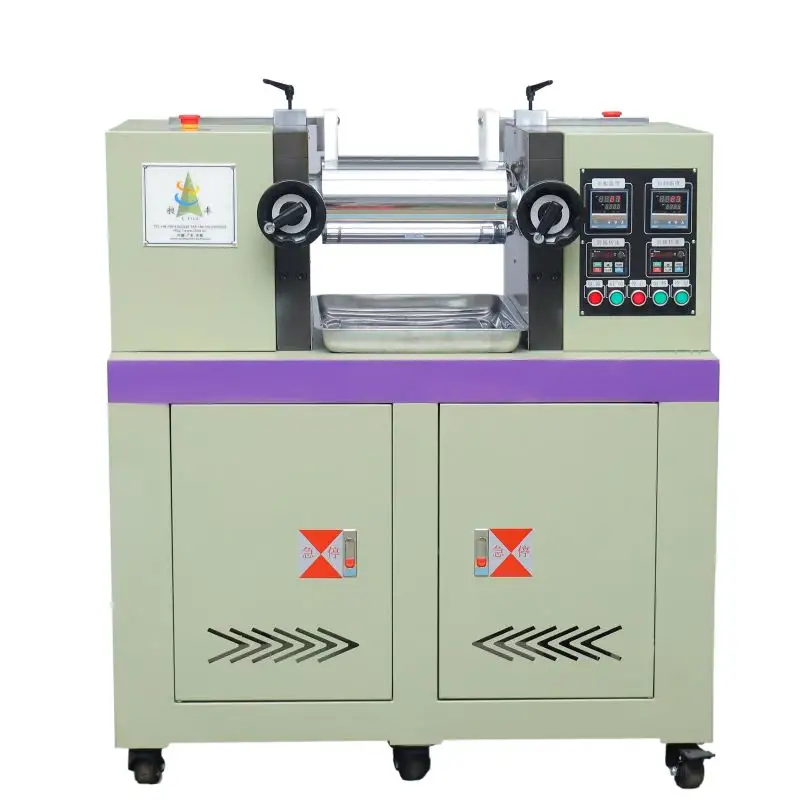
The Role of Mixing Mill in Rubber Processing
Understanding the mixing mill for rubber applications
The rubber mixing mill stands out as a special type of machinery designed to blend together raw rubber materials, various fillers, and chemical additives until everything forms an even mixture. The machine typically features two rollers spinning in opposite directions which create just the right amount of force needed to break apart long polymer strands while thoroughly mixing in important ingredients like carbon black, sulfur compounds, and accelerator chemicals. Manufacturers rely heavily on this basic but essential process when making all sorts of rubber products including vehicle tires, sealing gaskets, and heavy-duty conveyor belt systems. Recent data from the 2024 Rubber Processing Industry Study shows that contemporary versions of these two roll mills can reach around 97 percent efficiency in dispersing materials within tire tread formulations provided operators maintain proper friction levels during production runs.
Core functions of rubber mixing machinery performance
Key mechanical actions define mixing mill performance:
- Shear generation: Rotor speed differentials (typically 1:1.25–1:1.4) create internal friction to disperse additives
- Temperature control: Water-cooled rollers maintain 50–70°C to prevent premature vulcanization
- Batch consistency: Automated gap adjustments (±0.1mm precision) ensure uniform compound thickness
Modern mills reduce energy consumption by 18% compared to older models while maintaining 99.5% uptime through intelligent load sensing.
Integration of mixing equipment in rubber production lines
Leading manufacturers synchronize mixing mills with downstream processes using Industry 4.0 protocols. Real-time viscosity sensors feed data to extruders and calendars, enabling dynamic adjustments to compound flow rates. A typical integrated line achieves 23% faster cycle times than standalone systems while reducing material waste by 12–15% through closed-loop feedback mechanisms.
Key Process Parameters Affecting Mixing Mill Performance
Critical mixing parameters: Speed, pressure, and fill factor
Modern rubber mixing mills rely on precise control of three interdependent variables: rotor speed, internal pressure, and material fill factor. Optimizing these parameters reduces energy consumption by 18–22% while achieving 98% filler dispersion efficiency. Excessive fill factors (>75%) create uneven shear distribution, while pressures below 12 bar fail to sufficiently activate polymer chains.
Impact of rotor speed and filler loading on dispersion quality
When we boost rotor speeds from 30 to 40 rpm, carbon black dispersion gets better by around 34%. However, going past that point causes temperature spikes which actually make rubber lose its elasticity. The heat factor becomes really important for those working with silica-based materials since these need processing temps under 140 degrees Celsius. Most experienced technicians know that whenever there's a 10% jump in filler content, they have to cut back batch sizes somewhere between 8 and 12 percent just to keep shear rates where they should be for proper mixing results.
How parameter control ensures stable and reliable mixing performance
Modern milling systems now come with built-in torque sensors that work alongside smart algorithms to tweak settings while the machine is running. These real-time monitoring features help maintain almost perfect batch consistency around 99.5% accuracy even when dealing with variations in how thick or runny the raw materials are. The system basically acts as its own quality checker. Without this kind of feedback loop, there's a real risk of either leaving parts underprocessed which leads to those annoying dead spots in the product, or going too far and breaking down polymers before their time. Both problems end up costing manufacturers money through production delays and waste.
Optimizing the Rubber Mixing Process for Consistent Quality
Process Optimization Through Precise Parameter Tuning
Getting consistent outcomes means adjusting five main factors systematically. These include rotor speed between about 45 to 65 RPM, keeping batch temperatures around 110 to 130 degrees Celsius, maintaining a fill factor of roughly 65 to 75 percent, allowing mixing time from 4 up to 8 minutes, and applying ram pressure somewhere between 5 and 7 bars. Today's mixing equipment comes equipped with IoT sensors that monitor how well materials are dispersing as they work. This allows operators to spot issues like sudden temperature increases or clumping of fillers and make adjustments within just half a minute. When manufacturers maintain strict control over all these settings, they see a significant drop in viscosity differences across batches. Studies show this brings down variability by nearly 40 percent when compared to older manual methods of operation.
Mixing Schemes and Additive Sequencing for Improved Homogeneity
Staged material introduction is essential for silica-reinforced compounds or bio-fillers. A proven 3-phase sequencing strategy includes:
- Base elastomer plasticization (2–3 minutes)
- Carbon black/oil absorption phase (4 minutes @ 60°C)
- Curative incorporation (<90°C to prevent scorch)
This approach, validated in tire tread production trials, reduces mixing energy consumption by 22% while maintaining 99.5% dispersion uniformity across batches.
Overcoming Dispersion Challenges With New Raw Materials and Fillers
Shifts toward sustainable materials like rice husk silica (RHS) and devulcanized rubber require modified protocols. For RHS composites:
- Increase rotor speed by 15% to counter low structure density
- Implement split feeding (50% at startup, 50% midway)
- Limit mixing temperature to 110°C to preserve fiber integrity
These adaptations enable 92% dispersion efficiency in eco-tire sidewall compounds–comparable to traditional carbon black formulations.
Case Study: Efficiency Gains in High-Volume Tire Manufacturing
A tier-1 tire producer achieved an 18% throughput increase after reconfiguring their mixing mill line:
| Parameter | Before Optimization | After Optimization |
|---|---|---|
| Cycle Time | 8.2 minutes | 6.7 minutes |
| Energy Use/Tonne | 78 kWh | 63 kWh |
| Batch Consistency | ±12% Mooney | ±4.5% Mooney |
Key improvements included predictive ram pressure adjustment and split-phase additive injection, reducing rework rates from 8.4% to 1.1% across 12,000 tonnes of annual production.
Comparison of Mixing Mill Types: Design and Performance
Tangential vs. Intermeshing Rotor Designs in Rubber Mixing Mills
Rubber mixing mills typically come with either tangential or intermeshing rotor designs, each one bringing something different to the table. The tangential type works with parallel blades that create high shear through speed differences. These are pretty good for natural rubber applications where keeping temperatures under control matters a lot. On the other hand, intermeshing rotors have this gear-like setup that really works the material hard. They can disperse carbon black in synthetic rubbers about 15 to 20 percent faster than traditional methods. Tangential models tend to be easier to clean and offer more flexibility when changing recipes, but intermeshing systems shine when dealing with tough stuff like silica. Their precise mixing action makes all the difference when trying to get those stubborn fillers properly distributed throughout the compound.
Performance Metrics: Dispersion Quality, Energy Use, and Cycle Time
Modern mixing mills are evaluated using three benchmarks:
| Metric | Tangential Rotor | Intermeshing Rotor |
|---|---|---|
| Dispersion Quality | 92–94% homogeneity | 96–98% homogeneity |
| Energy Consumption | 0.28–0.32 kWh/kg | 0.35–0.40 kWh/kg |
| Cycle Time | 4.5–5.5 minutes | 3.8–4.2 minutes |
Data sourced from 2023 Compound Efficiency Report
The intermeshing rotor design cuts down on mixing time by about 12 to maybe even 18 percent, though it does come at a cost since these systems typically eat up around 20 to 25 percent extra power per batch. Things have changed somewhat recently though thanks to improvements in closed-loop temperature controls which let tangential mills keep pace with intermeshing ones when it comes to spreading out silica particles without giving up their edge in energy savings. Still, many industries stick with intermeshing technology especially in areas where precision matters most such as producing medical-grade rubbers. For these applications, getting those nanoparticles distributed evenly within just half a micrometer tolerance isn't optional it's absolutely required.
Ensuring Long-Term Reliability of Rubber Mixing Mills
Predictive Maintenance and Real-Time Monitoring for Uptime Assurance
Modern rubber mixing mills achieve over 95% operational uptime through predictive maintenance systems that analyze vibration patterns, bearing temperatures, and torque fluctuations. Monitoring these parameters enables early intervention on wear components such as rotors or seals–reducing unplanned downtime by 40% compared to reactive maintenance.
Data-Driven Calibration of Mixing Process Parameters
Advanced mills automatically adjust settings using historical performance benchmarks. Viscosity sensors paired with AI algorithms dynamically optimize rotor speed and filler loading during NBR compounding, ensuring consistent quality across batches. This closed-loop system eliminates manual trial-and-error adjustments, which previously contributed to 15–20% material waste.
Balancing Standardization and Customization in Mixing Mill Design
While standardized components enhance interchangeability and lower maintenance costs, leading manufacturers adopt modular designs to meet material-specific needs. Dual-diameter chamber options on newer models allow seamless switching between carbon black-filled tire compounds and silica-reinforced specialty rubbers without compromising seal integrity or mixing efficiency.
FAQ
What is the primary function of a rubber mixing mill?
A rubber mixing mill blends raw rubber materials with fillers and chemical additives to create an even mixture suitable for different rubber products like tires and gaskets.
How do modern mixing mills improve energy consumption?
Modern mixing mills reduce energy consumption by optimizing rotor speed, internal pressure, and fill factor, leading to an 18% decrease in energy use compared to older models.
What is the difference between tangential and intermeshing rotors?
Tangential rotors offer high shear through speed differences, while intermeshing designs provide precise mixing action ideal for dispersing filler materials effectively.
Why is temperature control important in rubber mixing mills?
Temperature control is crucial to prevent premature vulcanization, ensuring that the mixing process produces high-quality rubber compounds.